
Artificial Intelligence in Everyday Life
Understanding the Technology Around Us
Deepak Singhal
Introduction
Artificial
Intelligence, commonly called AI, has quickly become one of the most
talked-about technologies in the world.
You may
have heard about AI in the news, seen people using AI tools at work, or noticed
applications that seem to understand what you are asking them.
But what
exactly is Artificial Intelligence?
Do you
need to be a technology expert to understand it?
Absolutely
not.
At its
simplest, AI is about creating computer systems that can perform tasks that
normally require some form of human intelligence—such as understanding
language, recognizing patterns, making predictions, solving problems, or
helping people make decisions.
And the
interesting part is that AI is already part of our everyday lives.
You may be using it without even realizing it.
What Exactly Is Artificial
Intelligence?
Think
about how humans learn.
A child
may see a dog several times and gradually learn to recognize what a dog looks
like.
Similarly,
an AI system can be trained using large amounts of information to identify
patterns and produce useful results.
Depending
on how it is designed, an AI system may be able to:
- Understand written or spoken
language
- Recognize images
- Identify patterns
- Make predictions
- Recommend content
- Generate text or images
- Assist with problem-solving
- Automate repetitive tasks
However,
AI does not "think" exactly like a human.
It works using mathematical models, data, algorithms, and computing systems to identify patterns and generate results.
Where Do We See AI in
Everyday Life?
You don't
necessarily need to open a dedicated AI application to experience Artificial
Intelligence.
It is
already present in many everyday services.
Smartphones
Your
smartphone may use AI for:
- Face recognition
- Voice assistants
- Camera improvements
- Predictive text
- Spam detection
- Photo organization
When your phone automatically identifies people or objects in photographs, AI may be working behind the scenes.
Movies and Music
Have you
ever wondered how Netflix, YouTube, Spotify, or similar services seem to know
what you might enjoy?
Recommendation
systems analyze your previous activity and identify patterns to suggest content
that may interest you.
For example, if you regularly watch travel videos, a platform may recommend more travel-related content.
Online Shopping
Online
shopping platforms use AI and data analysis to provide personalized
recommendations.
You might
see:
"You
may also like..."
or
"Customers
who bought this also bought..."
These recommendations are often generated using algorithms that analyze customer behavior and purchasing patterns.
AI in Healthcare
Artificial
Intelligence is also being explored and used in healthcare.
It can
assist professionals with tasks such as:
- Analyzing medical images
- Identifying patterns in
health data
- Supporting research
- Monitoring patients
- Assisting with
administrative tasks
AI can be
a powerful supporting technology, but it does not replace qualified medical
professionals.
Healthcare decisions require professional expertise, clinical judgment, and consideration of individual patient circumstances.
AI in Education
Education
is another area where AI can provide useful assistance.
Students
can use AI-based tools to:
- Understand difficult
concepts
- Practice languages
- Generate study questions
- Summarize learning material
- Receive personalized explanations
Teachers
can also use AI to assist with lesson planning, educational content, and
administrative tasks.
However, students should use AI as a learning assistant, not as a replacement for thinking and learning themselves.
AI at Work
AI is changing
the workplace as well.
Businesses
are using AI to help with:
- Customer support
- Data analysis
- Document processing
- Marketing
- Research
- Software development
- Repetitive administrative
tasks
Imagine
an employee spending hours organizing information in a spreadsheet.
An AI-powered system may be able to process that information much faster, allowing the employee to spend more time on tasks requiring creativity, communication, and decision-making.
Generative AI: Creating
Something New
One of
the most visible developments in recent years has been Generative AI.
Unlike
traditional software that primarily follows predefined instructions, generative
AI can produce new content based on patterns learned from its training data.
It can
generate things such as:
- Text
- Images
- Audio
- Video
- Computer code
This has
made AI accessible to people who may not have a technical background.
For example, someone can ask an AI tool to explain a complicated concept in simple language or help brainstorm ideas for an article.
AI Is Powerful, But It
Isn't Perfect
This is
one of the most important things to understand about Artificial Intelligence.
AI can
produce impressive results, but it can also make mistakes.
Sometimes
an AI system may provide information that sounds convincing but is incorrect.
This is
why users should:
- Verify important
information.
- Avoid blindly trusting
AI-generated answers.
- Use reliable sources for
critical decisions.
- Protect personal and confidential
information.
- Remember that AI-generated
content may contain errors or bias.
The more important the decision, the more important human verification becomes.
Will AI Replace Humans?
This is
probably one of the most common questions about AI.
The
answer isn't as simple as yes or no.
AI can
automate certain tasks, particularly repetitive or data-heavy activities.
But many
human abilities remain extremely valuable.
These
include:
- Empathy
- Creativity
- Leadership
- Emotional understanding
- Ethical judgment
- Human relationships
- Complex decision-making
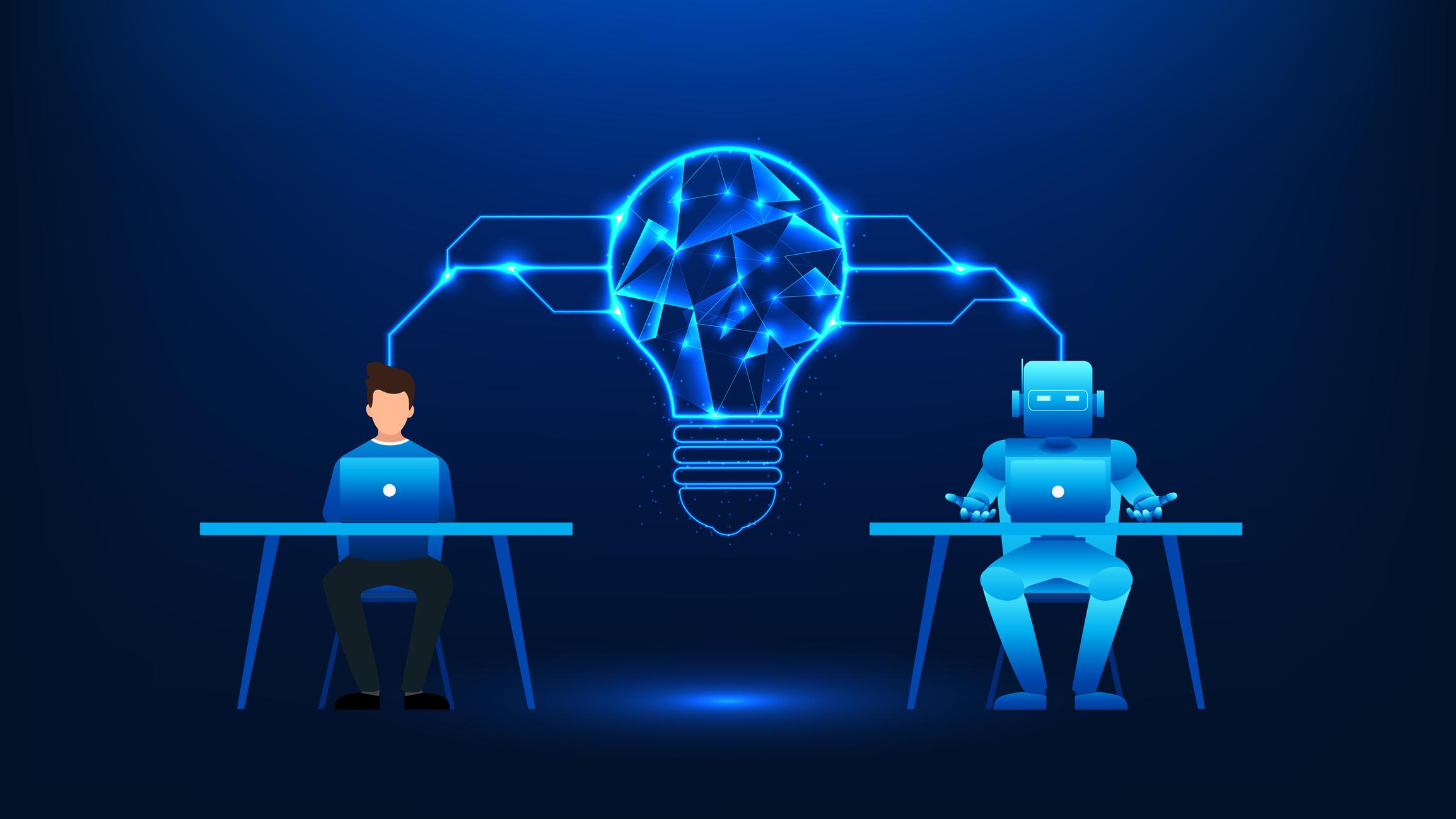
Rather
than thinking only about "AI versus humans," it may be more
useful to think about "humans working with AI."
People who learn how to use AI effectively may be able to work more efficiently and focus on higher-value activities.
The Importance of
Responsible AI
As AI
becomes more powerful, responsible use becomes increasingly important.
Important
concerns include:
- Privacy
- Data security
- Bias
- Misinformation
- Copyright
- Job displacement
- Ethical decision-making
Technology
itself is neither automatically good nor bad.
How we design, use, regulate, and monitor it determines much of its impact.
How Can You Start Learning
About AI?
You don't
need to become a programmer to understand AI.
Start
with simple questions:
Where am
I already using AI?
Look at
your smartphone, shopping apps, streaming services, search engines, banking
applications, and workplace tools.
Then
gradually explore:
- What is AI?
- What is Machine Learning?
- What is Generative AI?
- How do AI systems learn?
- What are the benefits and
limitations?
- How can AI help in your
profession or daily life?
Understanding the basics is often more valuable than simply knowing the latest AI buzzwords.
AI Is a Tool—How We Use It
Matters
Artificial
Intelligence is becoming another tool in our increasingly digital world.
Just as
the internet changed how we communicate and smartphones changed how we access
information, AI has the potential to change how we work, learn, create, and
solve problems.
But
technology should remain a tool that serves people, rather than
something people blindly depend upon.
The best
results will likely come from combining the strengths of both:
Human
intelligence + Artificial Intelligence
Humans
bring creativity, experience, empathy, and judgment.
AI can
bring speed, pattern recognition, automation, and the ability to process large
amounts of information.
Together, they can become much more powerful than either one alone.
Final Thoughts
Artificial
Intelligence may sound complicated, but its basic idea is easier to understand
than it first appears.
AI is
already helping recommend what we watch, improve photographs, detect suspicious
transactions, translate languages, assist businesses, support healthcare
research, and help people create content.
We are
still learning what AI will ultimately become.
Rather
than fearing it or blindly trusting it, the better approach is to understand
it, question it, and learn how to use it responsibly.
Because
the future of AI isn't only about what machines can do.
It's also about what people choose to do with them.
Key Takeaways
- AI enables computers to
perform tasks associated with human intelligence.
- AI is already present in
many everyday applications.
- Smartphones, shopping
platforms, entertainment services, and workplaces use AI in different
ways.
- Generative AI can create
text, images, audio, video, and code.
- AI can be powerful but can
also make mistakes.
- Human judgment and
verification remain important.
- AI is more likely to
transform many jobs and tasks than simply eliminate all human work.
- Understanding AI does not
require becoming a programmer.
- Responsible use of AI is
essential as the technology develops.
Think About It
The important question may not be "Will AI change our
lives?" — it is "How will we choose to use AI to improve them?"
Rate this article
Sign in to rate this article.