
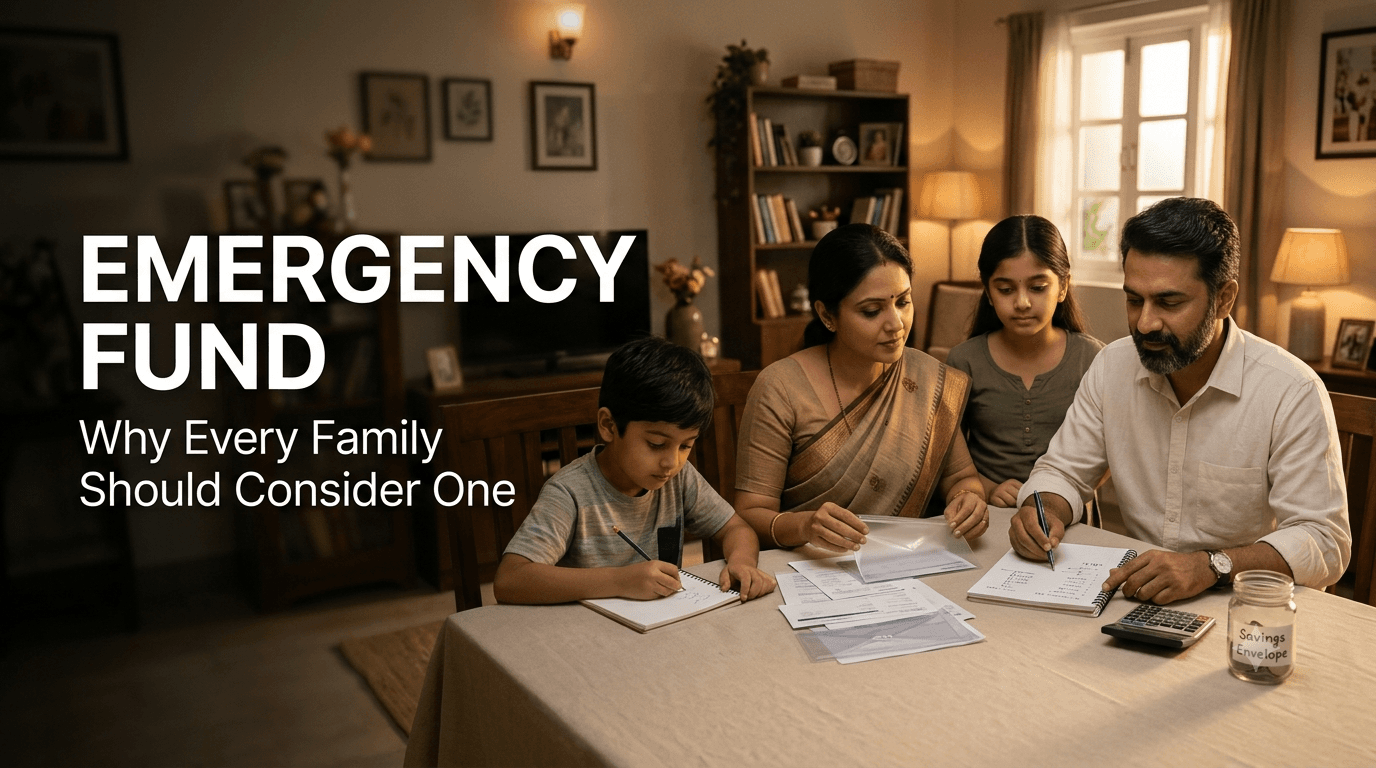
Emergency Fund: Why Every Family Should Consider One
While regular monthly expenses like rent and groceries are easy to budget for, unexpected events like medical emergencies or vehicle repairs can instantly disrupt family finances. Setting aside an emergency fund creates a crucial financial buffer, protecting you from costly borrowing and keeping long-term goals secure when surprises happen.
InkAuras
Introduction:
Most families have a plan for their regular expenses.
There is money for rent or a home loan, groceries, school fees, utility bills, transportation, insurance and other monthly commitments. There may also be plans for holidays, children's education, retirement or a future purchase.
But life doesn't always follow the budget.
A vehicle may suddenly need an expensive repair. A home appliance may stop working. An unexpected medical expense may appear. A family member may need to travel urgently. Or, in some situations, income itself may temporarily decrease or stop.
These situations can be financially stressful because they don't necessarily fit into the family's normal monthly budget.
This is where an emergency fund can play an important role.
An emergency fund is money deliberately set aside for unexpected expenses or financial emergencies. The Consumer Financial Protection Bureau (CFPB) describes examples such as unexpected medical bills, home or vehicle repairs and loss of income.
An emergency fund isn't about predicting exactly what will happen.
It is about creating a financial buffer so that an unexpected event doesn't immediately force a family to depend on expensive borrowing or disrupt other important financial goals.
What Is an Emergency Fund?
An emergency fund is a dedicated pool of money reserved for unexpected and necessary expenses.
It is different from money saved for:
- A family holiday
- A new phone
- Festival shopping
- A planned vehicle purchase
- Home renovation
- Entertainment
- Other predictable expenses
The purpose of an emergency fund is to handle situations that weren't part of the normal plan.
For example:
Planned expense: Your child's annual school fee is due next month.
Unexpected expense: Your refrigerator suddenly stops working and needs replacement or repair.
The first should generally be part of your regular financial planning.
The second could potentially be an appropriate use of emergency savings.
The CFPB recommends setting guidelines for what qualifies as an emergency and using the fund consistently for genuine unexpected expenses.
Why Does an Emergency Fund Matter for Families?
Families often have more financial responsibilities than individuals.
There may be children, elderly parents, home expenses, education costs, insurance premiums and other commitments that continue even when something unexpected happens.
Without savings, a financial shock may leave a family with limited options.
One possibility is using a credit card or taking a loan.
That may solve the immediate problem, but interest and fees can make the original expense more expensive over time. The CFPB notes that people without savings may rely on credit or loans following financial shocks, potentially making recovery more difficult.
An emergency fund doesn't eliminate financial problems.
Instead, it can provide another option.
That distinction is important.
Emergency Savings Can Start Small
One of the biggest misconceptions about emergency funds is that a family needs a very large amount of money before it is worth starting.
That's not necessarily the case.
The CFPB specifically notes that even putting aside a small amount can provide some financial security and recommends starting with what you can reasonably afford.
For example, a family might initially decide to save:
- ₹500 per month
- ₹1,000 per month
- ₹2,000 per month
- Or another amount that fits its budget
The exact amount matters less at the beginning than establishing a sustainable habit.
If ₹1,000 is realistically affordable every month, saving ₹1,000 consistently may be more useful than setting an unrealistic ₹10,000 target that repeatedly fails.
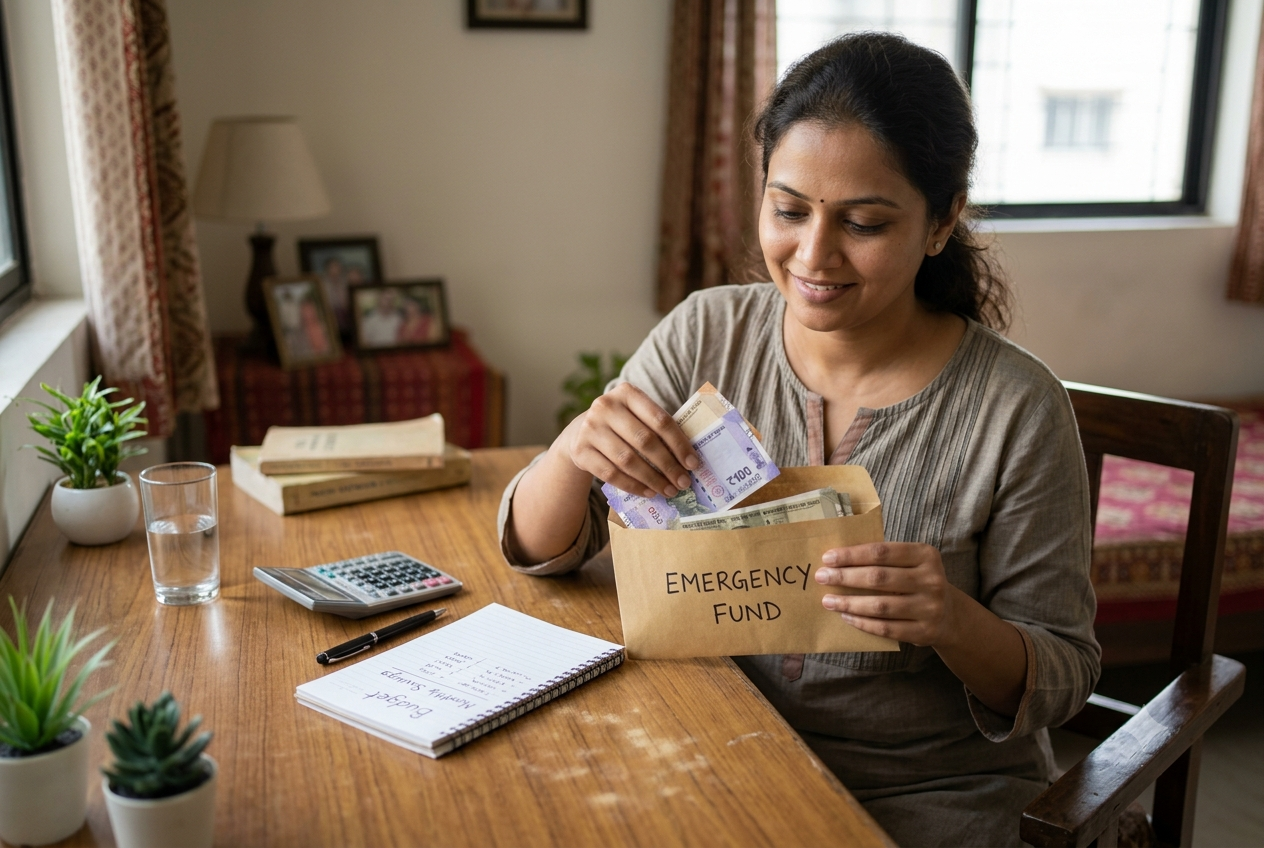
Start with what is possible, then increase the target when your financial situation improves.
How Much Should a Family Keep?
There is no single emergency-fund amount that is appropriate for every household.
Your target can depend on:
- Monthly essential expenses
- Number of dependents
- Stability of household income
- Number of income earners
- Existing insurance coverage
- Debt obligations
- Job security
- Access to other financial resources
- Health and family circumstances
FINRA commonly presents three to six months of living expenses as a useful emergency-fund goal.
However, that should not be treated as a universal rule.
A household with stable dual incomes and relatively low fixed expenses may have different needs from a household dependent on one income.
A family just beginning to save shouldn't necessarily wait until it can accumulate several months of expenses.
A practical approach is to think in stages.
Stage 1: Start a Basic Buffer
Create a small reserve that can handle some common unexpected expenses.
Stage 2: Build Greater Protection
Gradually increase the fund as your monthly budget allows.
Stage 3: Work Toward a Larger Target
Consider whether a reserve covering several months of essential expenses makes sense for your household.
The goal is progress, not perfection.
Calculate Your Emergency Fund Using Essential Expenses
When estimating your target, don't necessarily start with your entire monthly spending.
Instead, identify expenses that your family would still need to pay during a financial disruption.
For example:
Essential Expense
Monthly Amount
Housing
₹20,000
Groceries
₹12,000
Utilities
₹5,000
Transportation
₹5,000
Insurance
₹3,000
Education
₹10,000
Essential medicines
₹2,000
Total
₹57,000
If your household decided that six months of essential expenses was an appropriate long-term target:
₹57,000 × 6 = ₹3,42,000
This is only an illustration, not a recommendation for every family.
Your own target should reflect your circumstances.
Where Should You Keep an Emergency Fund?
An emergency fund is different from long-term investment money.
The main purpose is accessibility and financial safety, not maximizing investment returns.
The CFPB recommends considering a place where emergency savings are safe, accessible and less tempting to spend on non-emergency purchases.
For many families, this could mean maintaining a dedicated savings account with a regulated bank or financial institution.
FINRA similarly recommends keeping emergency funds in a savings account or another safe, readily accessible place rather than exposing money needed for emergencies to investment risk.
The exact account or product available to you will depend on your country, banking system and personal circumstances.
Before choosing an account, understand:
- How quickly you can access the money
- Applicable fees
- Withdrawal restrictions
- Interest terms
- Deposit protection applicable in your jurisdiction
- Tax implications, where relevant
An emergency fund generally shouldn't be treated like money that you can afford to lock away for years.

Keep It Separate From Everyday Spending
One practical way to protect an emergency fund is to keep it separate from the account used for daily spending.
If emergency savings sit alongside your regular spending money, it may become easier to use them for non-essential purchases.
A separate account can create a simple psychological boundary:
"This money is for unexpected needs."
You can also give the account a clear purpose, such as:
Family Emergency Fund
That simple label can make the objective more visible.
Automate Your Savings
Saving manually every month can be difficult.
There may always be another expense competing for the same money.
Automation can make the process more consistent.
For example, you could schedule a recurring transfer shortly after receiving your salary.
The amount doesn't have to be large.
The CFPB recommends automatic transfers as one practical way to make saving easier and more consistent.
You can also consider directing occasional extra money toward the fund, such as:
- Bonuses
- Gifts
- Refunds
- Freelance income
- Other unexpected income
You don't necessarily need to put all of it into savings.
Even allocating a portion can help move you toward your target.
Decide What Counts as an Emergency
An emergency fund becomes more useful when your family has clear rules for using it.
Possible examples include:
Potentially Appropriate Uses
- Unexpected essential medical expenses
- Necessary vehicle repairs
- Urgent home repairs
- Sudden loss of income
- Emergency family travel
- Essential replacement of a failed appliance
Usually Better Handled Through Normal Budgeting
- Planned vacations
- Restaurant outings
- New electronics
- Festival shopping
- Planned home improvements
- Regular school expenses
- Routine annual bills
The distinction isn't always perfect.
An expense that is optional for one family may be essential for another.
The important point is to establish a reasonable definition before an emergency happens.
Don't Feel Guilty About Using It
An emergency fund isn't successful because you never touch it.
It is successful when it is available for a genuine financial emergency.
If your car breaks down and you use emergency savings to pay for an essential repair, that isn't a failure.
That's what the fund was created for.
The CFPB explicitly advises that people shouldn't be afraid to use emergency savings when they need them and should then work toward rebuilding the balance.
Think of the process as:
Save → Use when necessary → Rebuild → Continue saving
The fund may rise and fall over time.
That's normal.
What If You Have Debt?
This is where personal circumstances become particularly important.
A family might have credit-card debt, a home loan, education debt or other obligations while also trying to establish emergency savings.
There isn't one universal strategy that works for everyone.
Building a small emergency buffer while addressing expensive debt may be a reasonable approach for some households.
FINRA also highlights the importance of considering high-interest debt when making broader financial decisions.
The right balance depends on factors such as:
- Interest rates
- Debt repayment terms
- Income stability
- Existing savings
- Family responsibilities
- Other financial goals
If the decision is complex or involves significant amounts of money, professional financial advice may be appropriate.
Make the Emergency Fund a Family Financial Habit
An emergency fund doesn't have to be an individual responsibility.
Parents can use the process as an opportunity to teach children basic financial concepts.
Older children can learn that:
- Not all income is meant to be spent immediately.
- Unexpected expenses can happen.
- Saving creates options.
- Financial goals require planning.
- Emergency savings are different from spending money.
These lessons can gradually help children understand that financial preparation is part of everyday life.
The CFPB also provides financial education resources focused on helping people understand unexpected expenses and develop emergency savings plans.
A Simple Emergency Fund Plan for Your Family
If your family hasn't started yet, keep the first step simple.
Step 1: Calculate Essential Monthly Expenses
Write down the expenses your household would need to continue paying.
Step 2: Set a Small Initial Target
Choose an amount that feels achievable rather than intimidating.
Step 3: Open or Designate a Separate Savings Account
Give the money a clear purpose.
Step 4: Automate a Regular Contribution
Even a small recurring transfer can help create consistency.
Step 5: Review the Fund Every Few Months
Increase the contribution when your income or budget allows.
Step 6: Use It When a Genuine Emergency Occurs
Don't hesitate to use it for a legitimate unexpected need.

Step 7: Rebuild After Using It
Once the immediate problem is resolved, restart your savings contributions.
Inkauras Insight
An emergency fund isn't about expecting something bad to happen. It's about accepting that unexpected expenses are part of life.
The goal isn't to create fear.
It is to create preparation.
A family with savings may have more choices when an unexpected expense arrives. Instead of immediately asking, "Where will we get the money?", the family may be able to ask, "How can we handle this?"
That difference can matter.
And you don't need to start with a huge amount.
Start small. Make it consistent. Build it gradually.
Final Thought
Financial planning isn't only about growing wealth.
It is also about protecting the progress you've already made.
An emergency fund can serve as a financial cushion between your family's regular budget and life's unexpected events. It won't prevent emergencies, and it can't guarantee financial security, but it may reduce the need to immediately rely on borrowing when an unexpected expense appears.
There is no perfect number that every family must save.
Start by understanding your essential expenses, household income, responsibilities and existing financial protection.
Then choose a realistic savings target and build toward it gradually.
A small financial buffer today can become a much stronger layer of protection tomorrow.
Important Disclaimer
This article is intended for general financial education and informational purposes only. It does not constitute personalized financial, investment, tax, legal or banking advice.
Emergency-fund requirements vary considerably based on income, expenses, dependents, debt, insurance, employment stability, location and individual financial circumstances. The three-to-six-month figure mentioned in this article is a commonly cited planning guideline from financial education sources, not a requirement or guarantee that applies to every household.
Before making significant financial decisions, consider your own circumstances and, where appropriate, consult a qualified financial professional. Readers should also verify applicable banking, deposit-protection, taxation and financial-product rules with relevant institutions and authorities in their jurisdiction.Rate this article
Sign in to rate this article.