
How Digital Payments Work
While scanning a QR code or tapping "Pay" feels instantaneous, every digital transaction relies on a coordinated network of banks, payment service providers, and real-time security checks. Understanding how money actually moves behind the screen helps you troubleshoot failed payments smoothly, avoid potential scams, and transact with greater confidence.
Abhinav Sharma
Introduction
Digital payments have become a common part of everyday life. People use mobile phones to pay at grocery shops, transfer money to family members, book tickets, shop online and settle household bills. In India, methods such as Unified Payments Interface (UPI), debit cards, credit cards, internet banking and mobile wallets have made electronic transactions accessible to many users.
But what happens after you scan a QR code or tap the “Pay” button? How does the money reach the other person's account, and why do some transactions fail even when the payment app appears to be working?
A digital payment involves more than a mobile app. Depending on the payment method, it may involve the payer's bank, the recipient's bank, a payment network, a payment service provider and security checks. These systems communicate to process the transaction and report its status.
Understanding the basics can help you use digital payments more confidently, recognize potential scams and respond appropriately when something goes wrong. This guide explains the process in simple terms, with examples relevant to everyday payments in India.
1. What Is a Digital Payment?
A digital payment is a transfer of money carried out electronically rather than through physical cash. The payment instruction is sent through a digital system, and the relevant financial institutions process the transaction.
Common examples include:
- UPI payments: Sending money using a UPI ID, mobile number where supported, or QR code.
- Debit card payments: Paying using money available in a linked bank account.
- Credit card payments: Using a line of credit provided by the card issuer, subject to its terms.
- Internet banking: Transferring money or paying bills through a bank's online service.
- Mobile wallets: Paying using funds or payment credentials supported by a wallet provider.
- Online bill payments: Paying utility bills, subscriptions or other charges electronically.
Although these methods may look similar to users, they do not all follow the same technical process. For example, UPI transfers and card payments use different payment arrangements and verification steps.
The important point is that the app or card is often the interface you see, while several connected systems may work behind the scenes.
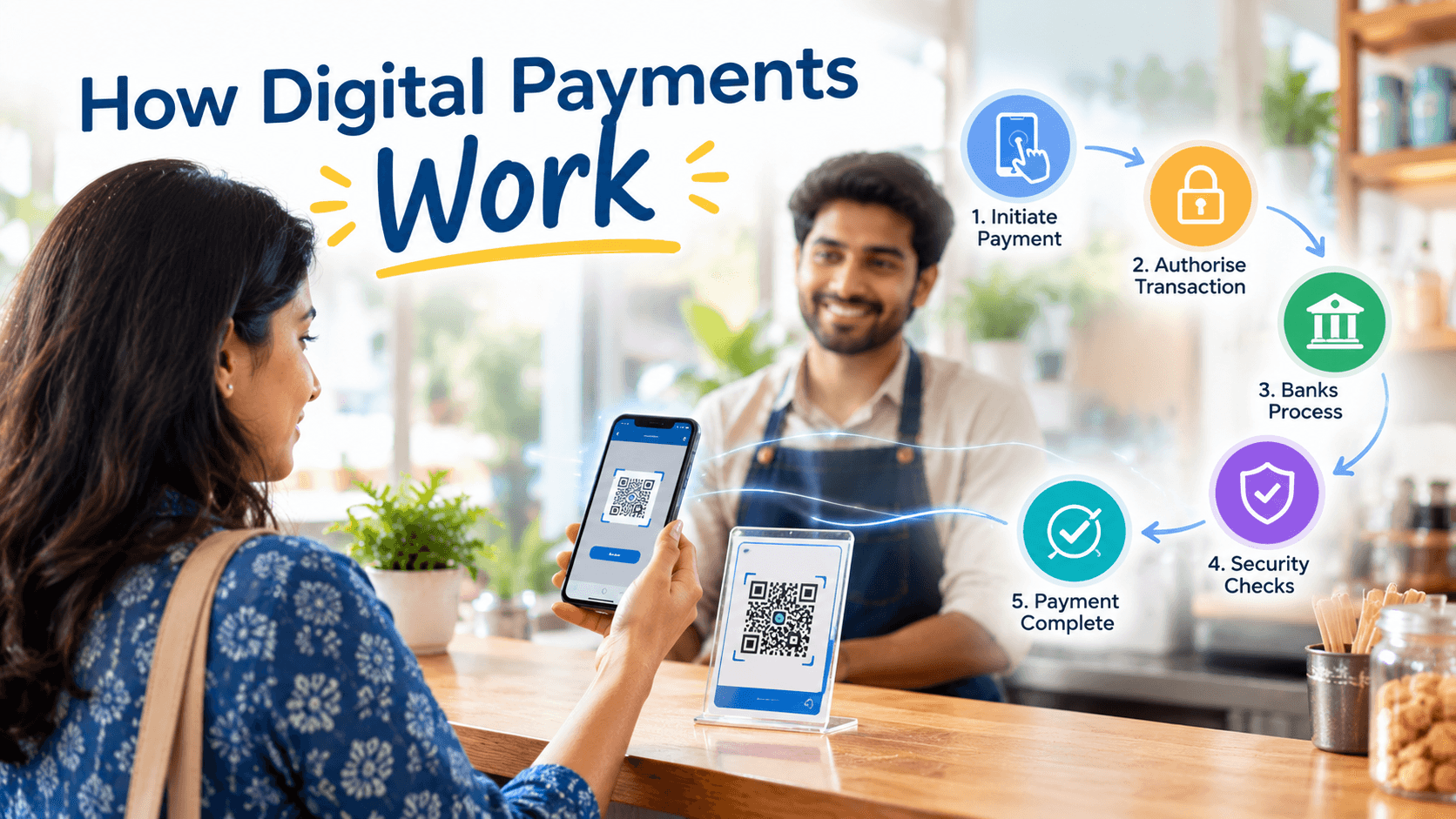
2. How a Digital Payment Works Step by Step
Imagine that you buy groceries from a local shop and pay using UPI. A simplified version of the process looks like this:
Step 1: You initiate the payment. You scan the shop's QR code or select its payment details, enter the amount and review the recipient information.
Step 2: You authorize the transaction. Depending on the payment method, you may need to enter a UPI PIN, complete a card authentication step or approve the payment through your bank.
Step 3: The payment instruction is processed. The relevant payment system routes the instruction to the appropriate financial institution. The exact route depends on the payment method.
Step 4: The transaction is checked. The system and participating institutions apply relevant validation, authorization, balance or limit checks, and security controls.
Step 5: The banks process the transfer. If the transaction is approved, the relevant accounts are debited and credited according to the payment system's process.
Step 6: You receive a status message. The app may display a successful, pending or failed status. The recipient may receive a separate confirmation.
Many transactions complete within seconds, but not every payment is instant or immediately confirmed. Network interruptions, bank-side issues and other processing problems can affect the result.
3. What Makes UPI Different?
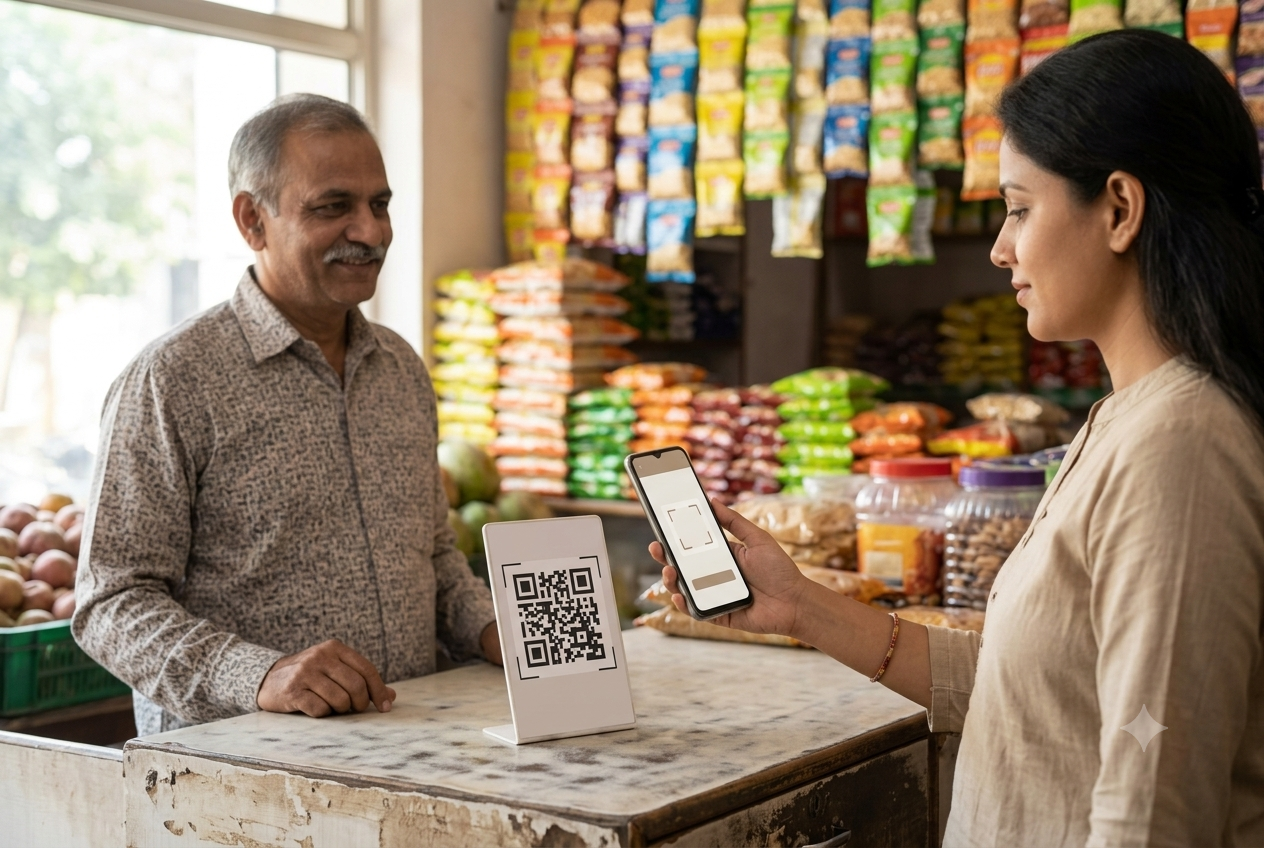
UPI, or Unified Payments Interface, is an Indian payment system developed by the National Payments Corporation of India (NPCI). It enables transfers between participating bank accounts through supported payment applications.
A useful feature of UPI is that you generally do not need to share your bank account number with every person you pay. You can use a supported UPI ID or scan a merchant's QR code.
Here is how the main components work:
- UPI app: Lets you initiate payments and view transaction details.
- UPI ID or QR code: Helps identify the intended payment destination or payment details.
- UPI PIN: Authorizes transactions that require PIN authentication.
- Banks and payment infrastructure: Process and route the payment instruction.
A QR code does not itself transfer money. It contains payment information that your app reads to help prepare the transaction. You should always verify the recipient and amount before approving the payment.
4. How Card Payments and Online Payments Work
Card payments use a different process from UPI. When you pay by debit or credit card, the merchant's payment terminal or online checkout sends a transaction request through the relevant payment processing network.
The card issuer checks the transaction according to its rules, including available funds or credit, applicable limits and security requirements. If approved, the payment is authorized. Clearing and settlement then take place according to the arrangements between the participating institutions.
For online purchases, a payment gateway can securely transmit payment information between the merchant's checkout and the payment processing system. The gateway facilitates communication; it is not necessarily the bank that holds the customer's money.
Depending on the transaction, you may be asked for an OTP or another authentication step. Only complete these steps on a legitimate checkout or through the official payment process.

5. How Are Digital Payments Kept Secure?
Digital payment systems use security measures such as authentication, transaction monitoring, encryption and risk checks. However, no payment method is completely immune to fraud.
Your own behavior matters, too. Follow these precautions:
- Never share your UPI PIN, banking password, card CVV or OTP with another person.
- Remember that you do not need to enter your UPI PIN simply to receive money.
- Check the recipient's name and amount before confirming a payment.
- Use official apps and websites and avoid unknown payment links.
- Never install an unfamiliar app or enable screen sharing because a caller claims to be from your bank.
- Enable transaction alerts and review your bank statements regularly.
The Reserve Bank of India advises customers not to share sensitive banking credentials and to report suspicious activity promptly.

6. What Should You Do If a Payment Fails?
Sometimes an app displays a pending or failed status even when money appears to have been deducted. This can happen because of connectivity issues, delayed confirmations or problems within a participating bank or payment system.
If this occurs:
- Check the transaction status and reference number in the official payment app.
- Check your bank account statement rather than relying only on a notification.
- Avoid immediately repeating a payment while the original transaction is unresolved, especially if the recipient may already have received the money.
- If the status remains unclear, contact your bank or payment provider through official support channels and follow its dispute process.
Keep the transaction ID, amount and date available when raising a complaint. Resolution times can vary by payment type and circumstances.
7. Benefits and Limitations of Digital Payments
Digital payments can make everyday transactions more convenient, reduce the need to carry cash and provide electronic records that help with budgeting and reconciliation. Businesses may also find it easier to track incoming payments.
However, users still need a compatible device or payment method, access to the required services and an understanding of basic security practices. Network interruptions, technical failures, mistaken transfers and scams remain possible. Some payment services may also have transaction limits, eligibility conditions or applicable charges.
Digital payments are a useful option, but cash and other payment methods may still be appropriate in some situations. Choosing a payment method should depend on convenience, safety and individual circumstances.
Inkauras Insight
A digital payment is not simply money moving because you tap a screen. It is a coordinated process involving payment instructions, authentication, financial institutions and transaction confirmation. Understanding these steps helps you recognize why payments sometimes fail and why checking the recipient and protecting your PIN are essential.
Final Thought
Digital payments have made it easier to transfer money, pay bills and shop without cash. Knowing how UPI, cards and payment gateways work can help you use these tools more responsibly.
Before every payment, pause to check the recipient and amount. Keep your credentials private, use official support channels and verify unexpected transaction messages. A few careful habits can make digital payments easier to manage while helping you reduce avoidable risks.
Disclaimer
This article is for general educational and informational purposes only. Payment processes, authentication requirements, transaction limits and complaint procedures may vary by provider and payment method. This article is not financial, legal or cybersecurity advice tailored to an individual situation. For a specific transaction or suspected fraud, contact your bank or payment provider through its official channels and follow relevant guidance from the appropriate authorities.
Share your views in the comment section.
Rate this article
Sign in to rate this article.