
How to Build Better Morning Habits
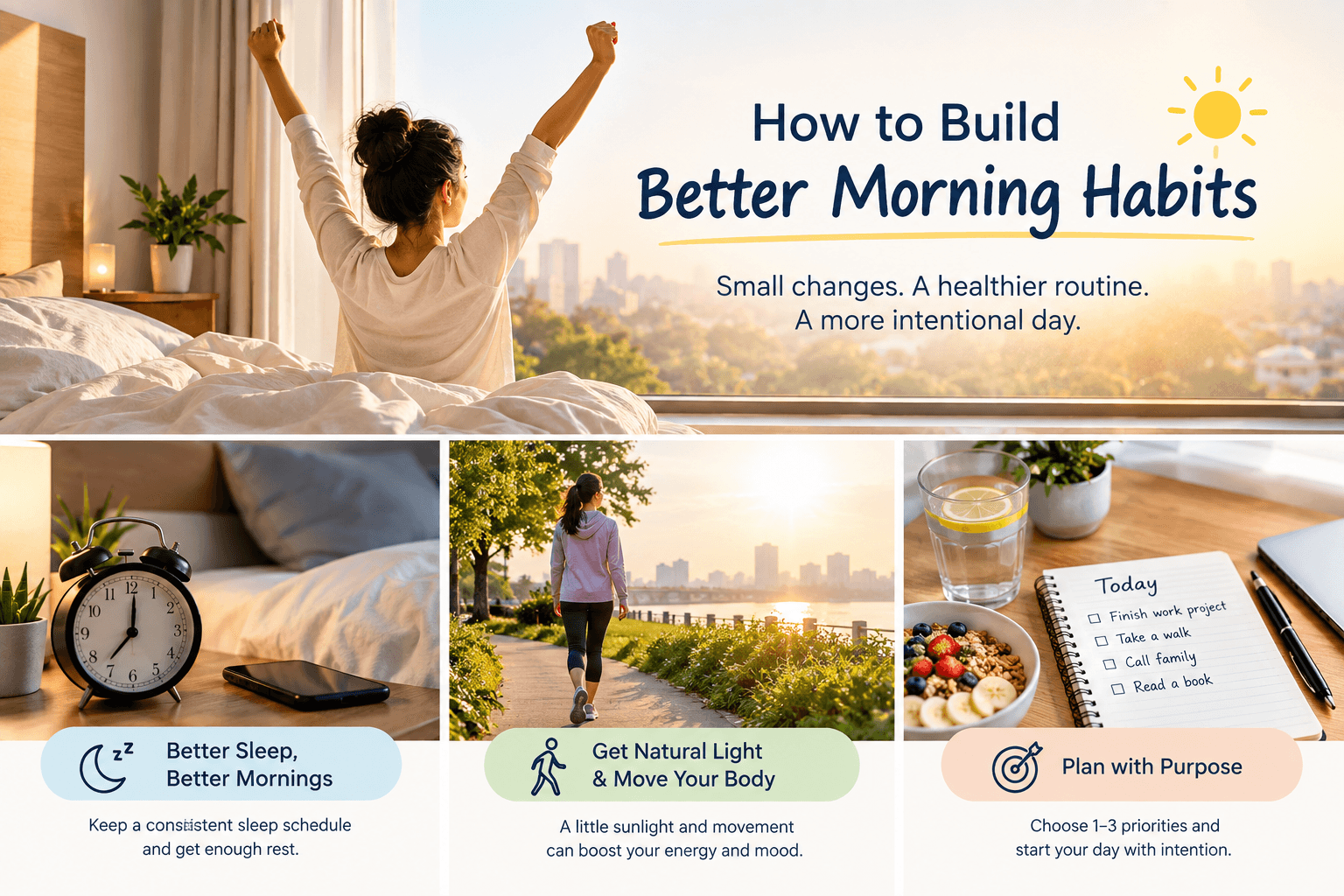
A productive morning does not require an extreme 5 a.m. routine; it simply needs to be a practical, repeatable start that fits your real life. Focusing on realistic and sustainable habits—rather than chasing an idealized standard of perfection—is what truly supports your daily organization and well-being.
InkAuras
Introduction
A morning does not have to begin at 5 a.m., with a long workout, meditation, journaling and a perfectly planned schedule to be productive.
For many people, mornings are actually quite ordinary. There may be children to get ready, household responsibilities, commuting, emails, breakfast and a long list of things waiting for the day to begin.
The goal of a better morning habit is therefore not to create a “perfect morning.” It is to create a simple and repeatable start to the day that works for your actual life.
Good morning habits can support better organization, physical activity, mental well-being and sleep routines. But they work best when they are realistic rather than extreme.
Why Do Morning Habits Matter?
The first part of the day can influence how we organize our time and attention.
If the morning begins with rushing, repeatedly checking notifications and trying to remember everything that needs to be done, it can be difficult to feel organized.
On the other hand, having a few predictable actions—such as getting up at a consistent time, drinking water, getting some natural light, moving your body and deciding what matters most that day—can create structure.
Importantly, a morning routine should support your life rather than become another source of pressure.
There is also an important connection between mornings and sleep. The CDC recommends maintaining a regular sleep schedule and getting natural light earlier in the day as part of healthy sleep habits. Most adults need at least seven hours of sleep each night.
Start With Your Wake-Up Time
One of the simplest habits to work on is having a reasonably consistent wake-up time.
That does not mean you have to wake up at 5:00 a.m.
If your work schedule requires you to wake at 7:00 a.m., making 7:00 a.m. your usual wake-up time may be more useful than forcing yourself to wake much earlier simply because someone else recommends it.
Consistency matters more than an impressive-looking schedule.
The CDC recommends going to bed and getting up at approximately the same times each day, including weekends.
If your current sleep schedule is irregular, change it gradually rather than attempting a dramatic overnight transformation.
And remember: waking up earlier is not automatically better if it means regularly sacrificing adequate sleep.

Avoid Starting the Day With Your Phone
For many people, the smartphone is the first thing they reach for in the morning.
One notification can quickly become ten minutes of scrolling, checking messages, reading news and moving between social media applications.
The problem isn't that smartphones are inherently bad. The problem is that allowing notifications to determine the first activity of your day can make your morning reactive rather than intentional.
Try keeping your phone away from your bed or using a separate alarm clock if that is practical.
Instead of immediately checking notifications, give yourself the first few minutes to wake up, get ready and decide what you want your morning to look like.
This doesn't have to mean completely avoiding technology. It simply means you decide when to engage with it.
Get Some Natural Light
Natural light is another useful part of a morning routine.
The CDC recommends getting enough natural light, particularly earlier in the day, and notes that a morning or lunchtime walk can be one way to achieve this.
You don't necessarily need a long outdoor session.
Depending on your circumstances, you might:
- Open the curtains after waking.
- Spend a few minutes outdoors.
- Take a short morning walk.
- Have breakfast near a naturally lit area.
- Step outside before starting work.
Morning light is not a magic productivity solution, but exposure to daytime light is connected with the body's biological rhythms and sleep-wake cycle.
Add Some Movement
You don't need an intense workout every morning.
A few minutes of stretching, walking, mobility exercises or another activity you enjoy can be a practical way to introduce movement into your day.
The CDC notes that regular physical activity has important health benefits and that adults should work toward at least 150 minutes of moderate-intensity activity per week, along with muscle-strengthening activity on two days per week. It also emphasizes starting gradually and choosing activities that fit your abilities and preferences.
Your morning routine can contribute to that overall activity without carrying the entire responsibility.
For example:
10-minute walk + normal daily movement + planned exercise later
may be much more sustainable than forcing yourself into an exhausting one-hour workout every morning.

Drink Water and Eat According to Your Needs
Hydration and breakfast are often included in popular morning routines, but there isn't one breakfast schedule that works for everyone.
Start by paying attention to your own needs.
If you are thirsty after waking, drinking water can be a simple choice. If you eat breakfast, choose foods that fit your dietary needs and lifestyle rather than following an internet trend.
A useful morning routine should be practical and sustainable, not dependent on expensive health products, supplements or complicated recipes.
If you have a medical condition, dietary restriction or specific nutritional requirement, personalized advice from an appropriately qualified healthcare professional is more useful than a generic morning routine.
Decide Your Top Priorities
A common mistake is turning a morning routine into a long checklist.
Wake up.
Exercise.
Meditate.
Read.
Journal.
Study.
Prepare a perfect breakfast.
Plan the entire day.
By the time everything is completed, the morning may already feel like a project.
Instead, try identifying one to three important priorities for the day.
For example:
- Complete the most important work task.
- Take a 20-minute walk.
- Spend uninterrupted time with family.
This gives your morning direction without making it unnecessarily complicated.
Prepare the Night Before
One of the easiest ways to improve your morning is actually to improve your evening.
Preparing a few things before going to bed can reduce morning decisions.
You could:
- Decide what you will wear.
- Prepare items needed for work or school.
- Keep breakfast ingredients ready.
- Write down tomorrow's priorities.
- Put your phone away before bedtime.
- Set a realistic wake-up time.
The NHS recommends a regular sleep routine and relaxing before bed, while also suggesting putting phones away as part of better sleep habits.
A smoother evening can therefore make the next morning easier.

Build One Habit at a Time
Perhaps the biggest mistake people make when building a morning routine is trying to change everything simultaneously.
Imagine someone currently wakes at 8:00 a.m. and immediately checks their phone. They suddenly decide to wake at 5:00 a.m., exercise for an hour, meditate for 20 minutes, read 30 pages and prepare an elaborate breakfast.
It may work for a few days.
Then real life happens.
A better approach is to start small.
Week 1
Wake up at a reasonably consistent time.
Week 2
Add five to ten minutes of outdoor light or walking.
Week 3
Add one short planning activity.
Week 4
Review what is actually helping and remove what isn't.
This approach may feel less exciting, but sustainable habits are usually more useful than short-lived enthusiasm.
Your Morning Routine Should Fit Your Life
A parent with young children may have a completely different morning from a single professional working from home.
A student, shift worker, business owner and retiree may all need different routines.
So instead of asking:
“What is the best morning routine?”
ask:
“What morning routine can I realistically follow most days?”
For one person, that may be a 60-minute routine.
For another, it may be only 15 minutes.
Both can be perfectly reasonable.
The quality of a routine should be judged by whether it helps you start your day in a practical and sustainable way—not by how impressive it looks on social media.
A Simple Morning Routine to Try
If you want to start without overcomplicating things, consider this basic structure:
Wake up → Get natural light → Drink water if needed → Move for a few minutes → Get ready → Identify your top priorities → Begin the day
That's it.
You can add reading, meditation, exercise, journaling or other activities later if they genuinely help you.
There is no requirement to copy someone else's routine.
Inkauras Insight
A better morning is not necessarily an earlier morning.
The most useful routine is one that protects adequate sleep, creates a little structure and helps you begin the day with intention.
Start with one small change. Make it easy enough to repeat. Once it becomes familiar, consider adding another.
And don't judge your entire day because your morning didn't go according to plan.
Some mornings will be productive. Others will involve traffic, children, unexpected calls, poor sleep or simply a bad mood.
The goal isn't a perfect morning. The goal is a healthier and more manageable rhythm over time.
Final Thought
Building better morning habits is less about discipline for its own sake and more about designing a routine that supports the person you want to be.
You don't need a complicated schedule, expensive products or a 5 a.m. wake-up time.
Start with the basics: sleep enough, wake at a reasonably consistent time, get some daylight, move your body, reduce unnecessary distractions and decide what matters for the day.
Then adjust the routine according to your real circumstances.
Small habits may appear insignificant on an individual morning, but when repeated consistently, they can become part of a more organized and intentional lifestyle.
Disclaimer
This article is intended for general informational and educational purposes only. It is not medical, psychological or professional health advice.
Individual sleep, exercise, nutrition and lifestyle needs can vary. If you have persistent sleep difficulties, significant fatigue, a medical condition, or concerns about changing your exercise or daily routine, consider speaking with an appropriately qualified healthcare professional.
Share your thoughts in the comment section.
Rate this article
Sign in to rate this article.