
How to Choose Family-Friendly Accommodation
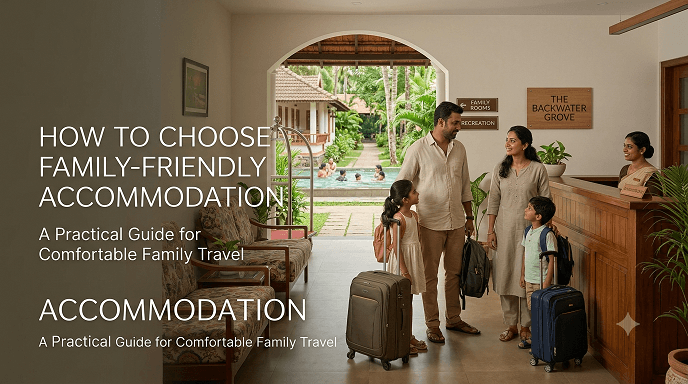
Selecting family travel accommodations requires looking beyond attractive photos to prioritize practical needs like space, location, safety, and flexible booking policies. The ideal option isn't simply the highest-rated property, but the one that aligns best with your family's specific routines, budget, and travel plans.
InkAuras
Introduction
Choosing accommodation for a family trip is different from choosing a place to stay for a solo trip or a short business visit.
A room that looks perfect in photographs may not necessarily work well for parents traveling with young children. A hotel may have an excellent location but provide little space for a family. Another property may offer a swimming pool and children's activities but be far away from the places you actually want to visit.
For families, the best accommodation is usually not the one with the most facilities or the highest rating. It is the one that fits your family's specific needs, travel plans and budget.
That means looking beyond the room photographs and asking practical questions.
Is the location convenient?
Will everyone have enough sleeping space?
Is the room suitable for the children's ages?
Are there useful facilities nearby?
Can the property accommodate dietary or accessibility needs?
What do recent guests say about noise and cleanliness?
What happens if your plans change?
The U.S. Department of State recommends researching lodging carefully, checking reviews and confirming important facilities directly with the property before booking. It also recommends paying attention to basic safety features such as functioning locks, emergency exits and fire-safety equipment.
A little preparation before booking can therefore make a significant difference to the overall travel experience.
1. Start With Your Family's Actual Needs
Before opening a hotel-booking website, make a simple list of what your family actually needs.
Think about:
- Number of adults
- Number and ages of children
- Length of the stay
- Sleeping arrangements
- Meal requirements
- Accessibility requirements
- Expected daily activities
- Transportation
- Budget
- Special equipment or services
A family traveling with a baby may prioritize a cot, refrigerator and quiet room.
A family with teenagers may care more about separate sleeping areas, Wi-Fi and access to public transportation.
A family traveling with grandparents may prioritize elevators, minimal stairs and easy access to medical facilities or pharmacies.
There is no universal definition of "family-friendly."
Your family's needs should define what family-friendly means for you.
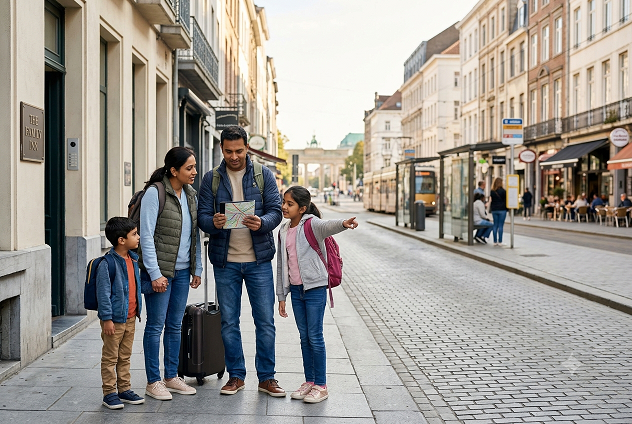
2. Consider the Location Before the Property
A beautiful hotel can become inconvenient if it is far away from everything your family wants to do.
Look at the accommodation's location in relation to:
- Tourist attractions
- Public transportation
- Restaurants
- Grocery stores
- Pharmacies
- Hospitals or clinics
- Beaches or parks
- Airports or railway stations
- Your planned activities
Parents sometimes underestimate the effect of daily travel time.
For example, a 45-minute journey may sound reasonable when booking a hotel. But making that journey twice a day with tired children can become frustrating.
The U.S. Department of State advises travelers to consider accommodations near public transportation and important services when assessing lodging safety and convenience.
Try to evaluate the accommodation based on your entire daily itinerary, rather than looking at the hotel in isolation.
3. Think About the Room Layout
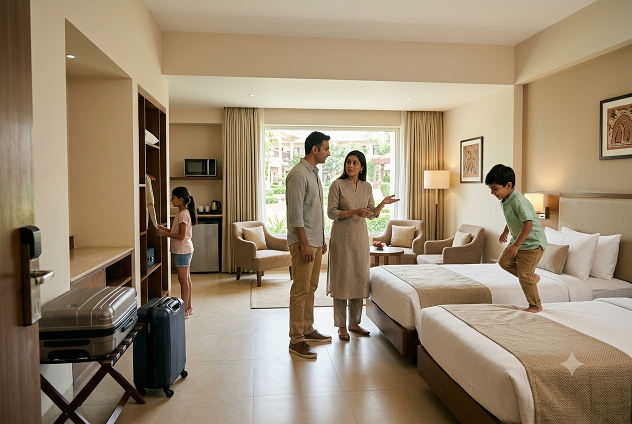
Room size matters, but layout can matter just as much.
A family of four may technically fit into one room, but that doesn't necessarily mean the arrangement will be comfortable.
Before booking, check:
- Number of beds
- Bed sizes
- Sofa-bed availability
- Maximum occupancy
- Separate sleeping areas
- Bathroom arrangement
- Storage space
- Balcony or terrace
- Kitchen or kitchenette
- Refrigerator
- Room configuration
If children go to sleep earlier than adults, a separate sleeping area can be particularly useful.
Some families may prefer adjoining rooms or a family suite.
If you need a particular configuration, don't assume that the booking description tells the complete story.
Contact the property and confirm it before paying.
The U.S. Department of State specifically recommends contacting accommodation providers before booking when travelers need particular facilities or accessibility features.
4. Check Whether the Property Is Suitable for Your Children's Ages
"Family-friendly" can mean different things depending on the age of your children.
Babies and Toddlers
You may need:
- Cot or crib
- High chair
- Refrigerator
- Kitchen facilities
- Easy access to a pharmacy
- Quiet sleeping environment
Young Children
You may prioritize:
- Safe play areas
- Family rooms
- Child-friendly meals
- Easy access to parks
- Pool safety arrangements
Older Children and Teenagers
You might consider:
- Separate sleeping arrangements
- Wi-Fi
- Nearby activities
- Public transportation
- Larger rooms or connecting rooms
Don't assume that a property offering a children's activity area automatically meets your family's needs.
Check what is actually available and whether additional fees or restrictions apply.
5. Look Beyond the Overall Rating
A hotel with a high overall rating can still have characteristics that don't suit your family.
Read recent reviews with specific questions in mind.
Look for comments about:
- Noise
- Cleanliness
- Room size
- Bed comfort
- Bathroom condition
- Staff responsiveness
- Breakfast
- Location
- Parking
- Elevator availability
- Air conditioning
- Internet connectivity
- Maintenance
Pay particular attention to reviews from families, because their priorities may be closer to yours.
A common mistake is to read only the overall star rating.
Instead, try to understand why people rated the property the way they did.
Also remember that reviews represent individual experiences. One guest's "small room" may be perfectly adequate for another family.
6. Don't Assume Every Amenity Is Included
A listing may mention a swimming pool, breakfast, airport transfer or children's facilities.
But "available" doesn't always mean "free."
Before booking, check:
- Is breakfast included?
- Is parking free?
- Is Wi-Fi included?
- Is the swimming pool open during your dates?
- Is a cot free or charged separately?
- Are extra beds available?
- Is there a resort or service fee?
- Is airport transportation included?
- Are children's activities included?
These details can significantly affect your actual travel budget.
When something is important to your family, verify it directly with the property rather than relying only on a booking description.
7. Consider Meal Options
Food can become an important part of family travel.
This is especially true when traveling with young children, people with food allergies or family members following particular dietary practices.
Before booking, check whether the accommodation offers:
- Breakfast
- Vegetarian options
- Children's meals
- Kitchen facilities
- Refrigerator
- Microwave
- Nearby restaurants
- Grocery stores
- Options for dietary restrictions
If someone in your family has a serious food allergy or medical dietary requirement, don't rely solely on a generic "dietary options available" statement.
Ask specific questions about ingredients, preparation and cross-contact where relevant.
For health-related dietary requirements, professional medical or dietary advice may be appropriate before travel.
8. Pay Attention to Safety Features
Safety shouldn't be an afterthought.
After checking in, parents can take a few minutes to understand the room and its surroundings.
Look for:
- Properly functioning door locks
- Window locks
- Balcony railings
- Stairways
- Fire alarms
- Emergency exits
- Fire extinguishers
- Potential electrical hazards
- Unsafe furniture placement
- Exposed wires
- Other hazards accessible to children
The CDC advises parents traveling with children to check accommodations for potential hazards such as exposed wiring or inadequate balcony and stair railings.
The U.S. Department of State also recommends checking room locks, fire alarms, carbon-monoxide detectors where applicable and emergency exit routes.
You don't need to become overly anxious about every detail.
The goal is simply to identify obvious concerns early.
9. Understand the Emergency Exit
When you arrive, take a few minutes to locate the nearest emergency exit.
Look at the emergency information displayed in the room and understand the route out of the building.
This is particularly useful when traveling with children because they may not know what to do in an unfamiliar building.
The U.S. Department of State recommends reviewing the emergency plan and identifying the closest emergency exit as soon as you arrive.
You can also explain the basics to older children:
"If something happens, stay with us and follow our instructions."
Keep the explanation calm and age appropriate.
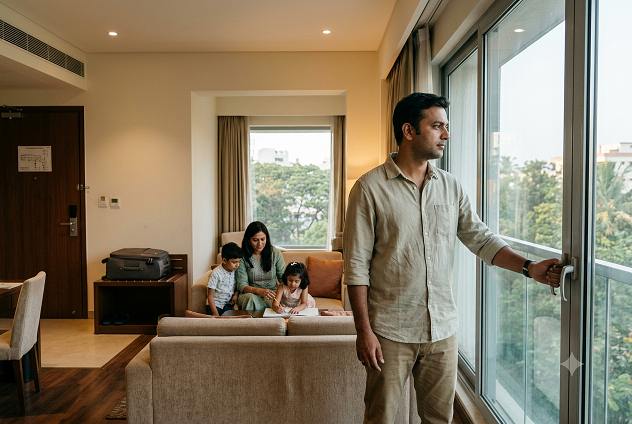
10. Think About Noise
Noise is one of the most overlooked accommodation factors for families.
A hotel may be perfectly comfortable but still make sleeping difficult if the room is next to:
- Elevators
- Nightclubs
- Busy roads
- Restaurants
- Event halls
- Swimming pools
- Ice machines
- Service areas
Families with babies or young children may be particularly sensitive to nighttime noise.
If your family needs a quiet room, ask the property whether it can provide one.
For children with sensory sensitivities, a quieter room away from busy common areas may be especially helpful. Individual needs vary, so it is worth discussing specific requirements with the accommodation before arrival.
11. Check Accessibility and Mobility Needs
If someone in your family has mobility limitations, don't rely on photographs.
Ask specific questions.
For example:
- Is there a working elevator?
- Are there steps between the entrance and reception?
- Is the room accessible without stairs?
- Is the bathroom suitable?
- Are accessible parking spaces available?
- Is the route to restaurants or common areas accessible?
The U.S. Department of State recommends contacting accommodation providers in advance to confirm accessibility features such as elevators and ramps when needed.
Accessibility requirements can be highly individual, so precise questions are often more useful than relying on generic labels such as "accessible."
12. Consider Transportation and Parking
If you're driving, parking can become an important part of the accommodation decision.
Check:
- Whether parking is available
- Whether it is free or paid
- Whether spaces are limited
- Whether advance reservation is required
- How far parking is from the property
- Whether the parking area is secure
- Whether public transportation is nearby
If you're not driving, consider how easily you can reach attractions, restaurants and transportation hubs.
A slightly more expensive property in a convenient location may sometimes reduce transportation costs and travel time.
But compare the total trip cost, rather than assuming that a higher room price automatically means better value.
13. Compare the Total Cost, Not Just the Room Rate
The advertised nightly price is only one part of your accommodation budget.
Consider:
Room price + taxes + fees + meals + parking + transportation + additional beds + other required services
For example, a cheaper hotel located far from your activities could require significantly more spending on taxis.
Another property may cost more per night but include breakfast and parking.
Neither option is automatically better.
The right comparison is:
What will this accommodation cost my family over the entire stay?
This can give you a much more realistic picture of value.
14. Contact the Property Before Booking When Something Matters
Booking websites are useful, but they can't always answer every family-specific question.
If something is important, contact the property.
For example:
"We are traveling with two children aged 4 and 8. Can you confirm the exact sleeping arrangement, whether a child cot is available and whether the room has a refrigerator?"
Specific questions usually produce more useful answers than:
"Is your hotel family-friendly?"
Keep written confirmation of important arrangements when possible.
That gives you a record of what was discussed.
15. Have a Backup Plan
Travel doesn't always go exactly as planned.
Accommodation can become unavailable, transportation can be delayed or a property may turn out to be unsuitable once you arrive.
The U.S. Department of State recommends booking accommodation in advance and having backup options available when traveling.
You don't necessarily need another hotel reservation.
Simply keep:
- The property's contact details
- Booking confirmation
- Cancellation information
- A second accommodation option
- Transportation details
- Emergency contacts
stored somewhere accessible.
A little preparation can make unexpected changes easier to handle.
A Simple Family Accommodation Checklist
Before confirming your booking, ask:
Location
☐ Is it convenient for our itinerary?
☐
Are restaurants and essential services nearby?
☐
Is transportation easily available?
Room
☐ Is the sleeping arrangement suitable?
☐
Is there enough space?
☐
Do we need adjoining rooms or a family suite?
Children
☐ Does the property accommodate their
ages?
☐
Is a cot or extra bed required?
☐
Are there any child-specific facilities we actually need?
Safety
☐ Do doors and windows lock properly?
☐
Are there obvious child-accessible hazards?
☐
Do we know the emergency exit route?
Cost
☐ Are taxes and fees included?
☐
Is breakfast included?
☐
Is parking included?
☐
Are there additional charges for children?
Special Requirements
☐ Have accessibility needs been
confirmed?
☐
Have dietary requirements been discussed?
☐
Have important arrangements been confirmed directly?
Inkauras Insight
The best family accommodation isn't necessarily the most luxurious one.
It is the accommodation that makes your family's trip easier, safer and more comfortable.
A convenient location may matter more than a fancy lobby.
A practical room layout may matter more than an impressive swimming pool.
A quiet environment may matter more than an extra facility that your family will never use.
Before booking, ask one simple question:
"Will this place make our trip easier for everyone in the family?"
That question can help you look beyond photographs, ratings and marketing descriptions.
Final Thought
Choosing accommodation for a family holiday doesn't have to be complicated.
Start by understanding your family's needs.
Then consider the location, room layout, sleeping arrangements, children's needs, safety features, food options, accessibility, transportation, reviews and total cost.
Most importantly, verify the details that matter before you book.
A few minutes of research can prevent a great deal of inconvenience later.
And remember, family-friendly doesn't mean perfect.
It means the accommodation is a practical match for the people who are actually traveling.
The right choice can give your family something valuable during a holiday:
less time dealing with avoidable problems and more time enjoying the journey together.
Important Disclaimer
This article is intended for general travel-planning and informational purposes only. It is not professional legal, medical, safety or accommodation advice.
Accommodation standards, safety requirements, accessibility provisions and local regulations vary between countries and properties. Families should independently verify important information with the accommodation provider and relevant official authorities before booking.
Parents and guardians remain responsible for assessing whether a particular property, room, facility or activity is appropriate for their children and individual circumstances.
For children with medical, developmental, accessibility or dietary needs, consider obtaining appropriate professional advice and communicating specific requirements to the accommodation provider before travel.
Share your views in the comment section.
Rate this article
Sign in to rate this article.