
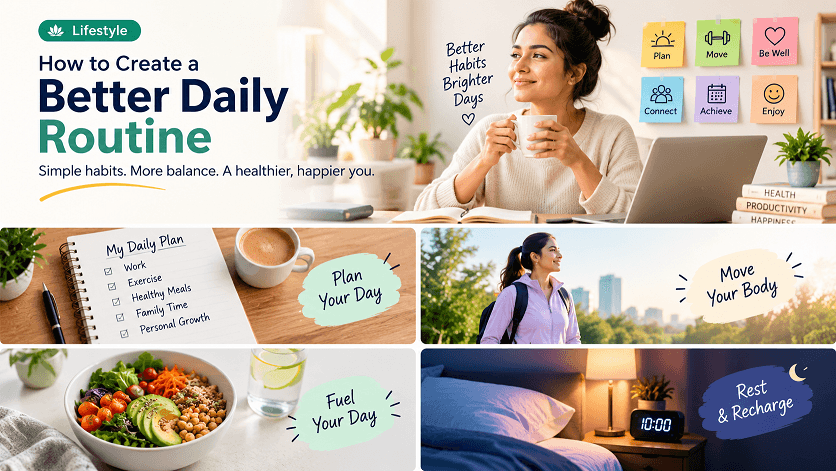
How to Create a Better Daily Routine
An effective daily routine is not about maintaining a rigid or perfect schedule, but about creating a simple, realistic structure that supports your priorities. Making a few manageable adjustments can help your day feel far more organized, even when unexpected events occur.
Abhinav Sharma
Introduction
A good daily routine doesn't mean waking up at 5 AM, exercising for an hour, reading 30 pages and completing every task before breakfast.
For most people, real life doesn't work that way.
Work gets busy. Children need attention. Meetings run late. Traffic takes longer than expected. Some days you simply don't have the energy to follow your plan.
A better daily routine isn't about creating a perfect schedule.
It's about creating a simple structure that helps you manage your time, take care of yourself and focus on what matters.
The good news is that you don't need to completely redesign your life.
A few realistic changes can make your day feel more organized and manageable.
What Makes a Daily Routine Useful?
A routine is essentially a pattern of activities that you repeat regularly.
Some routines eventually become habits. The American Psychological Association describes habit formation as a process in which repeated behavior can become increasingly easy to perform.
But a useful routine doesn't have to be complicated.
It might simply mean:
- Waking up around a consistent time
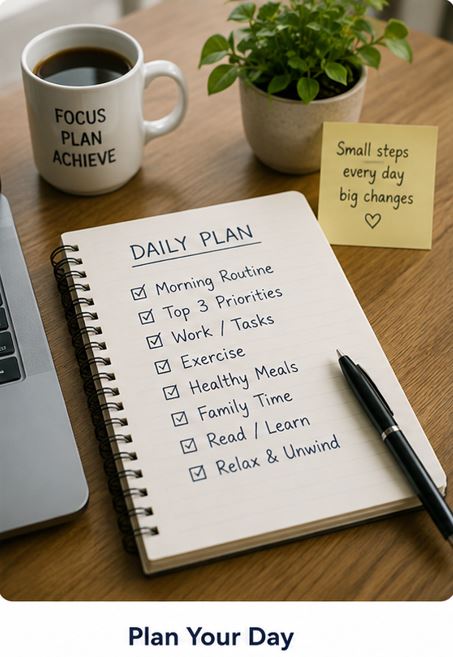
- Planning the important tasks for the day
- Eating meals at reasonable times
- Making time for movement
- Taking breaks
- Disconnecting from work
- Getting enough sleep
The goal is not to control every minute.
The goal is to reduce unnecessary decision-making and create some structure around your day.
1. Start With Your Existing Life
One common mistake is creating a routine based on someone else's lifestyle.
You may see a highly productive morning routine online and try to copy it exactly.
But your responsibilities may be completely different.
Instead, start by asking:
"What does my typical day already look like?"
For a few days, notice:
- When you usually wake up
- When your energy is highest
- Where you lose time
- When you usually feel tired
- How much time work or commuting takes
- When you naturally relax
- What tends to disrupt your plans
This gives you a realistic starting point.
A routine should fit your life, not force your life to fit the routine.
2. Choose Three Priorities for the Day
A long to-do list can sometimes create more pressure than productivity.
Instead of writing down 15 things you hope to accomplish, identify three important priorities.
For example:
Work: Complete the client presentation.
Home: Buy groceries.
Personal: Take a 20-minute walk.
Everything else can be treated as additional work if time allows.
This approach doesn't mean smaller tasks are unimportant. It simply gives you a clearer idea of what would make the day feel productive.
You can prepare your three priorities the evening before or shortly after starting your day.
3. Build Your Morning Around What You Actually Need
There is no universally correct morning routine.
Some people enjoy exercising early.
Others prefer a quiet breakfast.
Some people need to get children ready for school before they can think about themselves.
Rather than copying somebody else's routine, create a morning sequence that helps you start your day calmly.
For example:
Wake up → freshen up → drink water → breakfast → review priorities → begin the day
If you have more time, you might add exercise, reading, meditation or another activity you enjoy.
But don't feel that you need to include everything.
Simple and consistent is often more realistic than ambitious and exhausting.
4. Give Important Tasks a Place in Your Day
One useful way to improve a routine is to assign important activities a general time rather than constantly deciding when to do them.
For example:
Morning: Focused work
Afternoon: Meetings and routine tasks
Evening: Family, exercise or personal activities
Night: Relaxation and preparation for tomorrow
This doesn't mean every day has to follow the same timetable.
Instead, you're creating broad time blocks.
If something unexpected happens, you can adjust the schedule without feeling that the entire day has failed.
5. Make Movement Part of Your Routine
Physical activity doesn't have to mean spending an hour in a gym.
Walking, cycling, dancing, gardening or other activities can also contribute to an active lifestyle.
The NHS notes that physical activity can support physical and mental well-being, and recommends building activity gradually; its general adult guidance includes a target of at least 150 minutes of moderate-intensity activity over a week.
If you're currently inactive, you don't have to immediately aim for a demanding workout schedule.
Start with something manageable.
For example:
- Take a short walk after lunch.
- Use stairs when practical.
- Walk while taking a phone call.
- Stretch between long periods of sitting.
- Choose an activity you actually enjoy.
The best routine is one you can realistically continue.
6. Plan Meals Instead of Making Every Decision at the Last Minute
Food decisions can become surprisingly difficult when you're tired or busy.
Planning some meals in advance can make everyday life easier.
You could:
- Prepare breakfast ingredients the night before.
- Keep simple healthy snacks available.
- Plan a few meals for the week.
- Keep basic ingredients at home.
- Prepare larger portions when convenient and save some for another meal.
NIDDK recommends planning meals and snacks ahead and keeping nutritious options available as practical ways to support healthier eating habits.
This doesn't mean every meal needs to be perfectly planned.
Leave room for flexibility.
Eating out with family or enjoying your favorite food occasionally can also be part of a balanced lifestyle.
7. Protect Your Breaks
When your schedule becomes busy, breaks are often the first thing people remove.
But working continuously doesn't necessarily mean you're using your time effectively.
A short break can give you an opportunity to:
- Step away from your screen
- Stretch
- Walk around
- Drink some water
- Take a few quiet minutes
- Reset your attention
You don't need a complicated productivity technique.
Sometimes simply stepping away from a task for a few minutes is enough to create some breathing space.
8. Create a Clear End to Your Workday
For people who work from home or have flexible schedules, the boundary between work time and personal time can become blurry.
You may finish your official work but continue checking emails, messages or work notifications throughout the evening.
If possible, create a simple end-of-work routine.
For example:
Finish priority tasks → review tomorrow's work → close laptop → leave workspace
This small ritual can help create a clearer psychological boundary between work and personal time.
Your evening doesn't need to become another productivity session.
It can simply be time to switch off.
9. Give Sleep a Fixed Place in Your Routine
Sleep shouldn't be whatever time remains after everything else is finished.
A consistent evening routine can make it easier to prepare for sleep.
You could:
- Keep a reasonably consistent bedtime.
- Reduce work-related activities before bed.
- Prepare clothes or important items for the next morning.
- Dim the lights and create a calmer environment.
- Put away tasks that can wait until tomorrow.
The exact routine will differ from person to person.
The important idea is to treat sleep as a regular part of your daily schedule rather than an afterthought.
10. Reduce Unnecessary Screen Time
Phones and social media can easily fill the small gaps in our day.
You check one notification.
Then another.
Before you realize it, 20 minutes have passed.
Instead of trying to eliminate screen time completely, create a few screen-free periods.
For example:
During meals
During conversations
During a short walk
Before bedtime
You can also turn off unnecessary notifications, so your phone isn't constantly asking for your attention.
The objective isn't to reject technology.
It's to make sure you decide when to use it.
11. Leave Some Empty Space
A routine packed from morning until night may look productive on paper but can be difficult to maintain.
Unexpected things happen.
A meeting takes longer.
A family member needs help.
Your commute is delayed.
You feel tired.
That's why it's useful to leave some buffer time between activities.
If you think something will take 30 minutes, don't necessarily schedule another important task immediately afterward.
A little flexibility can prevent one delay from disrupting your entire day.
12. Don't Try to Change Everything at Once
This may be the most important point.
If you currently have no routine, don't attempt to completely redesign your life tomorrow.
Start with one or two changes.
For example:
Week 1: Set a more consistent wake-up time.
Week 2: Add a short daily walk.
Week 3: Plan tomorrow's three priorities each evening.
Week 4: Create a more consistent bedtime routine.
NIDDK recommends starting with small changes and recognizing that developing new habits can take time. It also notes that setbacks are normal and that people can regroup and continue after them.
A routine is something you build, not something you achieve overnight.

What If You Miss a Day?
You will.
And that's completely normal.
Maybe you slept late.
Maybe work became overwhelming.
Maybe you travelled.
Maybe you simply didn't feel like following your routine.
Don't turn one missed day into:
"I have failed. I'll start again next month."
Instead:
"Today didn't go as planned. I'll continue tomorrow."
NIDDK specifically recognizes setbacks as part of changing habits and recommends getting back on track rather than abandoning the effort.
Consistency doesn't mean never missing a day.
It means returning to the behavior after interruptions.
A Simple Daily Routine You Can Adapt
Here's an example—not a prescription.
Morning
- Wake up around a consistent time
- Freshen up and have breakfast
- Review three priorities
- Begin your most important work
Afternoon
- Complete routine tasks and meetings
- Eat a balanced meal
- Take a short movement break
- Review what still needs attention
Evening
- Finish work
- Spend time with family or friends
- Walk, exercise or pursue a hobby
- Prepare a few things for tomorrow
Night
- Reduce work-related activity
- Put away unnecessary screens
- Reflect briefly on the day
- Follow your normal bedtime routine
Adjust this completely according to your responsibilities.
Inkauras Insight
A better routine isn't necessarily a busier routine.
Sometimes improving your day means doing fewer things—but doing the right things more consistently.
Instead of asking:
"How can I fit more into my day?"
try asking:
"How can I make my day work better for me?"
That change in perspective can make routine-building feel less like a productivity challenge and more like a way of creating a sustainable lifestyle.

A Five-Minute Routine Check
Before going to bed tonight, ask yourself:
- What went well today?
- What took more time than expected?
- What distracted me?
- Did I get enough time to rest?
- What are tomorrow's three priorities?
- Is there one small thing I can make easier tomorrow?
You don't need to redesign your entire life.
One useful improvement at a time is enough.
Final Thoughts
A good daily routine should give your day structure without making it rigid.
It should leave room for work, health, relationships, rest and the unexpected events that are simply part of life.
Start with a few realistic habits.
Make them easy to repeat.
Adjust them when your circumstances change.
And don't treat an imperfect day as failure.
The goal isn't to create a life where every minute is scheduled.
The goal is to create a daily rhythm that helps you live with more clarity, balance and intention.
Lifestyle Disclaimer
This article is intended for general lifestyle and educational information only. It is not a personalized medical, psychological, nutritional or professional recommendation.
Individual needs vary depending on age, health, work schedule, family responsibilities and other circumstances. If you have a medical condition, significant sleep difficulties, persistent stress or other health concerns, consult an appropriately qualified healthcare professional before making major lifestyle changes.
Share your thought in the comment section.
Rate this article
Sign in to rate this article.