
How to Create Your First Monthly Budget
Without a structured plan, tracking monthly spending can feel overwhelming, making it hard to see where your money actually goes. A monthly budget acts as a practical financial blueprint, giving you clarity over your cash flow so you can make informed decisions without sacrificing enjoyment.
InkAuras
Introduction
Managing money can sometimes feel complicated, especially when you don't know exactly where your income is going each month.
You may receive your salary, pay your bills, spend on groceries and transportation, make online purchases, and occasionally wonder why there isn't much left at the end of the month.
This is where a monthly budget can help.
A budget is essentially a plan for your expected income and expenses. The Reserve Bank of India describes budgeting as a way to plan future income and expenses and understand where your money is going.
Creating a budget doesn't mean you have to stop enjoying life or track every rupee forever. Instead, it gives you a clearer picture of your financial situation so you can make more informed decisions.
If you've never created one before, here's a simple way to get started.
1. Start With Your Monthly Income
The first step is to understand how much money you actually have available each month.
For someone with a regular salary, this may be relatively straightforward. If your income varies because you're self-employed, work on commission, freelance, or have multiple income sources, you may need to estimate your monthly income more carefully.
Create a simple list of your expected income.
Use your actual take-home income as the starting point rather than your gross salary.
If your income changes from month to month, consider using a conservative estimate rather than assuming you'll always earn your highest amount.
2. Track Where Your Money Goes
Before deciding how much you should spend, understand how much you are actually spending.
Look through your recent bank statements, credit card statements, UPI transactions, receipts and cash expenses.
The Consumer Financial Protection Bureau recommends reviewing actual spending and including expenses that don't occur every month, such as insurance, medical costs, gifts, education and vacations.
Don't ignore small purchases.
A ₹100 coffee may seem insignificant on its own, but several small purchases throughout the month can add up.
You don't need sophisticated software to begin. A notebook, spreadsheet or simple budgeting app can be enough.

3. Divide Your Expenses Into Categories
Once you've collected your spending information, organize it into broad categories.
Essential expenses
These are expenses you generally need to meet, such as:
- Rent or home expenses
- Electricity and utilities
- Groceries
- Transportation
- School or education expenses
- Insurance
- Healthcare
- Loan or debt payments
Flexible expenses
These may vary from month to month:
- Eating out
- Entertainment
- Shopping
- Travel
- Hobbies
- Subscriptions
Savings and financial goals
Don't think of savings as whatever happens to be left at the end of the month.
Instead, include your intended savings as part of the monthly plan.
This could include money for:
- Emergency savings
- A future purchase
- Education
- Retirement
- A travel goal
- Other long-term objectives
The right amount will depend on your income, obligations and financial goals.
4. Separate Needs From Wants
One useful budgeting exercise is to distinguish between needs and wants.
A need is something necessary for your basic financial responsibilities.
A want is something you'd like to have but could potentially postpone.
For example:
Need: Monthly electricity bill
Want: Upgrading your television even though the existing one works
Need: Groceries
Want: Ordering restaurant food several times a week
This doesn't mean wants should disappear from your budget.
Enjoyment is part of life.
The purpose is simply to understand which expenses are flexible when you need to make adjustments. RBI financial literacy material similarly highlights distinguishing between needs and wants as an important part of managing money.

5. Create a Simple Monthly Budget
Now bring your numbers together.
Imagine your monthly take-home income is ₹60,000.
Your budget might look something like this:
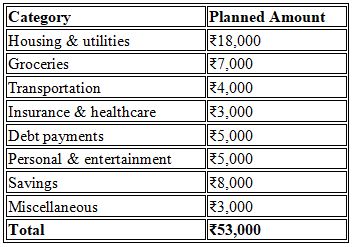
This leaves ₹7,000 unallocated.
That amount could potentially be directed toward additional savings, a specific financial goal, or retained as flexibility for variable expenses.
The numbers above are only an example. Your own budget should reflect your actual income, location, family responsibilities and financial priorities.
6. Don't Forget Irregular Expenses
One common budgeting mistake is planning only for expenses that happen every month.
Some costs may appear only once or a few times a year.
For example:
- Annual insurance premiums
- School-related expenses
- Festival spending
- Vehicle maintenance
- Medical expenses
- Gifts
- Travel
- Property-related expenses
If you know an expense is coming, consider estimating its annual cost and setting aside money regularly.
For example, if an annual expense is approximately ₹24,000, setting aside around ₹2,000 per month can make that future payment easier to manage.
This is one reason RBI recommends anticipating unexpected or irregular expenses when budgeting.
7. Give Yourself Some Flexibility
A budget shouldn't be so restrictive that you abandon it after a few weeks.
Real life is unpredictable.
You may spend more on groceries one month, have an unexpected repair, attend a family event or decide to go out with friends.
Instead of treating every difference as a failure, review what happened and adjust your plan.
A realistic budget is generally more useful than a perfect-looking budget that doesn't reflect your actual life.
The CFPB also recommends comparing your planned budget with actual spending and adjusting the numbers when they don't match reality.
8. Review Your Budget Every Month
Creating your first budget is only the beginning.
At the end of the month, ask yourself:
- Did I spend more than expected?
- Which categories were higher?
- Were there unnecessary subscriptions?
- Did I save the amount I planned?
- Did an unexpected expense affect the budget?
- What should I change next month?
The Reserve Bank of India specifically recommends keeping budgeting simple and reviewing the budget monthly.
Over time, this review can help you understand your spending patterns.
A Simple Rule to Remember
If you find budgeting overwhelming, start with just three questions:
1. How much money comes in?
2. Where does the money go?
3. How much can I reasonably set aside for future goals?
You can make the system more detailed later.
The goal of your first budget isn't to create a perfect financial plan. It's to develop awareness of your money.

Inkauras Insight
A budget isn't about telling yourself what you cannot buy. It's about knowing what you can comfortably afford.
When you understand your income, regular expenses, flexible spending and savings goals, financial decisions can become more intentional.
Start small.
Track your spending for one month, identify a few areas that need attention, and make realistic adjustments rather than trying to change everything at once.
Final Thought
Creating your first monthly budget may seem like a small financial exercise, but it can give you something valuable: clarity.
You don't need an expensive financial app or a complicated spreadsheet to begin. A simple list of your income and expenses is enough.
Your first budget probably won't be perfect—and that's okay.
Review it, learn from it and adjust it as your circumstances change.
The best budget is not necessarily the most detailed one. It is the one you can realistically understand, follow and review regularly.
Important Financial Disclaimer
This article is provided for general educational and informational purposes only. It is not financial, investment, tax, legal or professional advice, and it does not take into account your individual financial circumstances.
Examples and amounts used in this article are illustrative only and should not be considered recommendations.
Before making significant financial decisions, consider consulting a qualified financial professional who can assess your individual circumstances. Financial products, regulations, tax rules and personal circumstances can vary, particularly across countries and over time.
Share your view in the comment section.
Rate this article
Sign in to rate this article.