
How to Stay Motivated When Progress Feels Slow
When immediate results aren't obvious, pursuing long-term goals often feels discouraging and repetitive. However, slow progress doesn't mean failure—shifting your focus from the final destination to the everyday process is key to staying the course.
Abhinav Sharma

Introduction
You start something with enthusiasm.
A new fitness routine. A professional goal. Learning a new skill. Building a business. Studying for an exam. Writing regularly. Saving money.
In the beginning, motivation can feel easy.
But after a few weeks, reality often looks different.
The results may not be obvious. Your efforts may seem repetitive. Someone else may appear to be moving faster. You may start wondering:
"Am I actually getting anywhere?"
This is one of the most difficult stages of pursuing a goal—not necessarily because you have stopped working, but because the results aren't arriving as quickly as you expected.
Slow progress can make motivation difficult, but it doesn't necessarily mean you're failing.
Sometimes, the better approach is to stop measuring only the destination and start paying attention to the process.
Why Does Slow Progress Feel So Frustrating?
One reason is that we naturally want our effort to produce visible results.
If you study for an hour, you want to feel that you've learned something.
If you exercise consistently, you may expect noticeable physical changes.
If you're building a project, you want to see it growing.
But many worthwhile goals don't work like that.
Progress can be gradual, uneven and difficult to see in the short term.
You might spend weeks learning something before suddenly realizing that a task that once seemed difficult has become easier.
This is why judging progress only by immediate results can sometimes create unnecessary frustration.
1. Separate Progress From Immediate Results
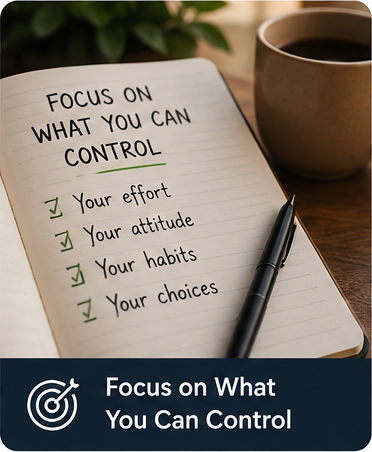
One of the most useful changes you can make is to distinguish between effort and outcome.
You can control whether you:
- Practice today
- Complete today's task
- Study for a certain amount of time
- Follow your planned routine
- Review what you have learned
- Take the next reasonable step
You cannot always control:
- How quickly results appear
- How other people respond
- External circumstances
- Unexpected setbacks
- The exact timeline of success
This doesn't mean outcomes don't matter.
They do.
But focusing exclusively on outcomes can make the process emotionally exhausting.
Instead, ask yourself:
"What is one useful thing I can do today?"
That question is often more manageable than:
"Why haven't I achieved my final goal yet?"
2. Break a Large Goal Into Smaller Milestones
Large goals can feel overwhelming because the distance between where you are and where you want to be seems enormous.
Imagine saying:
"I want to learn programming."
That's a huge objective.
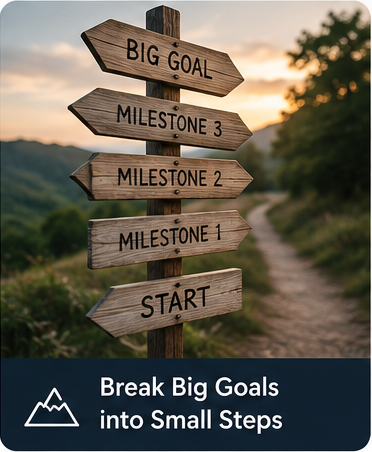
Instead, break it into smaller milestones:
Understand the basics → Build a small project → Learn a framework → Build a larger project → Improve through practice
The same principle works for many areas of life.
Instead of:
"I want to get healthier."
You might focus on:
Walk regularly → Improve sleep habits → Eat more balanced meals → Build consistency
Small milestones make progress easier to recognize.
They also give you more opportunities to experience a sense of accomplishment along the way.
3. Measure the Process, Not Just the Result
Sometimes you are progressing without noticing it.
Consider someone learning a new language.
After two weeks, they may still struggle to have a conversation.
It can feel like nothing has changed.
But perhaps they now understand words that previously sounded unfamiliar.
Perhaps they can form simple sentences.
Perhaps they can understand short written messages.
Those are forms of progress.
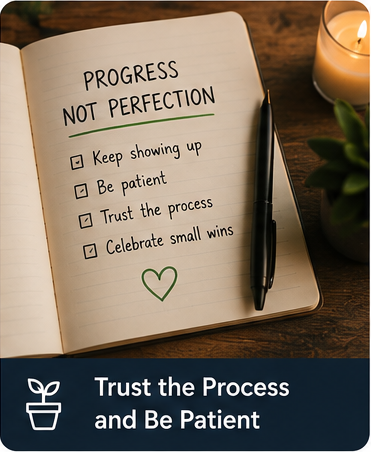
This is why keeping a simple record can help.
Depending on your goal, you could track:
- Hours practiced
- Tasks completed
- Pages studied
- Workouts completed
- Skills learned
- Projects finished
- Habits maintained
The measurement should be relevant to the goal.
You don't need a complicated tracking system.
A simple notebook, calendar or digital note may be enough.
4. Don't Compare Your Beginning With Someone Else's Middle
Comparison can make slow progress feel even slower.
You may look at someone who has already achieved something and compare their current position with your own.
But you usually don't see:
- How long they have been working
- Their previous failures
- Their available resources
- Their circumstances
- The support they received
- The challenges they experienced
Social media can make this even more difficult because people tend to share achievements more often than ordinary struggles.
Instead of asking:
"Why am I not where they are?"
Try asking:
"Am I further ahead than I was a few months ago?"
That comparison is often more useful.
5. Expect Motivation to Change
One common misconception is that successful people remain motivated all the time.
Real life is rarely that simple.
Motivation naturally changes.
Some days you may feel energetic and focused.
Other days you may feel tired, distracted or uninterested.
That doesn't automatically mean you've lost your commitment.
It means you're human.
This is where routines can become useful.
If you rely entirely on motivation, you may only work when you feel inspired.
If you create a reasonable routine, you have something to fall back on when motivation is lower.
The goal isn't to force yourself to work constantly.
It's to create a sustainable pattern that doesn't depend entirely on how you feel on a particular day.
6. Make the Next Step Small Enough to Start
When progress feels slow, your goal can suddenly feel much bigger.
You may think:
"I have so much left to do."
That thought can make starting difficult.
Instead, reduce the size of the next action.
Don't think:
"I need to finish this entire project."
Think:
"I'll work on it for 20 minutes."
Don't think:
"I need to become fluent."
Think:
"I'll learn five new words today."
Don't think:
"I need to completely change my lifestyle."
Think:
"I'll take a short walk today."
A smaller starting point doesn't guarantee success.
But it can make action feel more manageable.
7. Review Your Goal When Necessary
Slow progress isn't always a reason to simply work harder.
Sometimes it is a reason to review the plan.
Ask yourself:
- Is the goal still important to me?
- Is the timeline realistic?
- Am I using an effective approach?
- Do I need to learn something first?
- Am I trying to do too much at once?
- Is there a different method worth trying?
Changing your approach isn't necessarily giving up.
Sometimes it is simply learning from experience.
A goal can remain the same while the strategy changes.
8. Learn to Recognize Invisible Progress
Not all progress produces an obvious result.
You may become:
- More knowledgeable
- More disciplined
- More confident
- Better organized
- More patient
- Better at handling mistakes
- More aware of what doesn't work
These changes can be difficult to measure.
But they can still be valuable.
For example, someone who has failed several times while learning a skill may eventually become better at recognizing mistakes and correcting them.
The result may not be immediately visible, but the learning is still part of the journey.
9. Give Yourself Time to Rest
There is another side to motivation that is often overlooked.
Rest.
If you continuously push yourself without adequate recovery, your motivation may suffer.
Rest doesn't necessarily mean abandoning your goal.
It can mean taking a break, changing activities, getting enough sleep or giving yourself time away from the task.
A sustainable routine needs space for recovery.
You don't have to be productive every minute of every day to make progress.
10. Don't Turn a Slow Phase Into a Negative Identity
One difficult week doesn't mean:
"I'm lazy."
One missed workout doesn't mean:
"I'm undisciplined."
One unsuccessful project doesn't mean:
"I'm not capable."
A setback describes an event.
It doesn't necessarily define you.
Instead of making a permanent judgment about yourself, describe the situation more accurately:
"This week didn't go according to plan."
That leaves room for adjustment.
You can make a different decision tomorrow.
A Simple 5-Step Approach When Motivation Drops
If you're feeling stuck, try this simple process:
Step 1 — Pause
Take a moment to recognize that progress feels slow.
Step 2 — Look Back
Compare your current position with where you started.
Step 3 — Identify One Win
Find one thing that has improved, even if it seems small.
Step 4 — Choose One Next Action
Decide what you can realistically do today.
Step 5 — Continue
Don't worry about completing the entire journey today.
Just take the next useful step.
When Should You Change Direction?
Persistence is valuable, but persistence doesn't mean blindly continuing forever.
Sometimes a goal needs to be changed.
Perhaps your circumstances have changed.
Perhaps the original goal no longer matches your priorities.
Perhaps the method isn't working.
Or perhaps the goal needs to be broken into smaller stages.
Changing direction after thoughtful reflection isn't necessarily failure.
It can be part of making better decisions.
The important thing is to distinguish between temporary frustration and a genuine reason to reconsider your approach.
Inkauras Insight
When progress feels slow, don't ask only:
"How far do I still have to go?"
Also ask:
"How far have I already come?"
The second question can reveal progress that the first one hides.
You don't have to move at someone else's speed.
You don't have to see dramatic results every week.
Sometimes progress looks like a major achievement.
Sometimes it looks like simply showing up again.
Both can matter.
Final Thoughts
Slow progress can be frustrating.
It can make you question your ability, your strategy and sometimes even the goal itself.
But slow doesn't necessarily mean unsuccessful.
Some things take time to develop.
Skills require practice. Habits require repetition. Businesses take time to build. Knowledge grows gradually. Personal change rarely happens overnight.
Instead of expecting constant motivation, focus on creating a process you can realistically maintain.
Set smaller milestones. Track your progress. Avoid unnecessary comparisons. Review your approach. Rest when necessary. And focus on the next step.
You may not always notice progress while you're making it.
Sometimes, you only recognize how far you've come when you look back.
Keep moving—but give yourself permission to move at a sustainable pace.
Motivation & Well-being Disclaimer
This article is intended for general informational and educational purposes only. It is not psychological, medical or mental-health treatment advice.
Motivation naturally varies, and difficulty staying motivated can have many possible causes. If persistent low motivation is accompanied by significant distress, changes in sleep or appetite, loss of interest in usual activities, difficulty functioning, or other concerning symptoms, consider speaking with a qualified healthcare or mental-health professional.Rate this article
Sign in to rate this article.