
Simple Ways to Reduce Daily Stress
While stress is a normal reaction that can help us stay focused, long-term stress can negatively impact physical and mental well-being. Managing it effectively doesn't require a complete life overhaul, as small, simple adjustments can make daily challenges far more manageable.
Abhinav Sharma
Introduction
Stress is a normal part of everyday life.
A busy workday, a difficult conversation, financial responsibilities, family commitments, traffic or an unexpected problem can all create stress. Sometimes stress can even be useful, helping us respond to challenges and stay focused.
The problem often begins when stress becomes difficult to manage or continues for a long time.
The American Psychological Association notes that prolonged or chronic stress can affect both physical and mental health, while healthy coping strategies can help people manage everyday stressors.
The good news is that reducing daily stress doesn't always require a dramatic lifestyle change.
Small adjustments can sometimes make everyday life feel more manageable.
Here are some practical approaches worth considering.
1. Start by Identifying What Is Actually Stressing You
When you're feeling overwhelmed, it can seem as though everything is the problem.
But stress often comes from several specific sources.
It could be:
- Too many tasks at work
- Lack of sleep
- Family responsibilities
- Financial concerns
- Constant notifications
- Difficult relationships
- Unrealistic expectations
- Lack of personal time
Instead of simply thinking, “I'm stressed,” try asking:
“What exactly is creating the most pressure today?”
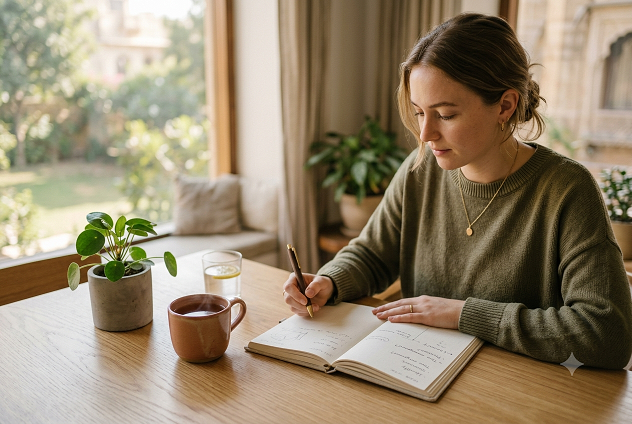
Writing down the situation, your thoughts and how you're feeling can help you identify patterns. The APA recommends identifying stressors and considering which parts of a situation can actually be changed.
Once the source becomes clearer, the solution may also become easier to see.
2. Don't Try to Solve Everything at Once
A long list of unfinished tasks can make even a normal day feel overwhelming.
One practical approach is to divide large tasks into smaller pieces.
For example, instead of writing:
“Finish the entire project.”
Break it into:
- Review the information
- Create an outline
- Complete the first section
- Check the results
- Send the draft
The NHS recommends breaking large tasks into more manageable chunks as one practical way of dealing with stress.
You don't necessarily have to finish everything immediately.
Sometimes reducing the size of the next task is enough to make it feel more manageable.
3. Take Short Breaks During the Day
When you're busy, taking a break can feel unproductive.
But continuously working without pauses can make it harder to maintain concentration and manage tension.
A short break doesn't need to mean 30 minutes away from work.
It could simply be:
- Standing up for a few minutes
- Walking around
- Looking away from your screen
- Drinking some water
- Taking several slow breaths
- Stepping outside briefly
The purpose isn't to escape your responsibilities.
It's to give yourself a small mental reset before returning to them.
Even a few minutes can create a useful separation between one task and the next.
4. Make Movement Part of Your Routine
Physical activity is another practical way to support stress management.
You don't necessarily need a gym membership or an intense workout.
A brisk walk, cycling, stretching, dancing or another activity you enjoy can be a reasonable starting point.
The APA notes that regular physical activity can help combat stress and may also support better sleep.
If you have a desk-based routine, consider adding small amounts of movement throughout the day.
For example:
Morning: 10-minute walk
Afternoon: Short movement break
Evening: Gentle stretching
The goal isn't to create another demanding obligation.
It's to make movement a natural part of your day.
5. Try a Simple Breathing Exercise
Stress can sometimes make your breathing faster or shallower and leave you feeling physically tense.
A short breathing exercise can provide a moment to pause.
One simple approach suggested by the APA is:
- Slowly breathe in for about four seconds.
- Hold for about four seconds.
- Breathe out for about six seconds.
- Repeat several times.
You don't need special equipment or an app.
You can try it while sitting quietly at your desk or in another comfortable place.
This should be viewed as a simple relaxation technique rather than a guaranteed solution for stress.

6. Protect Your Sleep
Stress and sleep can influence each other.
A stressful day can make it difficult to relax at night, while insufficient sleep can make it harder to deal with the next day's challenges.
The APA recommends protecting sleep by maintaining a consistent sleep routine and creating time to wind down before bedtime.
Some practical habits include:
- Going to bed at a reasonably consistent time
- Creating a relaxing wind-down period
- Limiting caffeine later in the day
- Reducing unnecessary screen use before bed
- Keeping your sleeping environment comfortable
You don't need a perfect bedtime routine.
Consistency is often more practical than trying to change everything overnight.
7. Give Yourself Some Screen-Free Time
Technology makes life easier in many ways, but constant notifications can make it difficult to mentally switch off.
Messages, emails, social media and news can keep your attention moving from one thing to another.
Try creating small periods during the day when you deliberately step away from your devices.
For example:
During meals: Keep your phone aside.
Before bed: Reduce unnecessary screen use.
During personal time: Turn off non-essential notifications.
The goal isn't to avoid technology completely.
It's to make sure technology doesn't occupy every available moment of your attention.
8. Spend Time With People You Trust
When people feel stressed, they sometimes withdraw from others.
But supportive relationships can be an important part of coping.
Talking to someone doesn't mean they have to solve your problem.
Sometimes you simply need someone who will listen.
The APA identifies social support as an important resource for dealing with stress and recommends reaching out to trusted people when things become difficult.
You could:
- Call a friend
- Have tea with a family member
- Talk to a colleague you trust
- Take a walk with someone
- Simply tell someone, “I've had a difficult day.”
Small moments of connection can make stressful days feel less isolating.
9. Spend Some Time Outdoors
A change of environment can sometimes help create a mental break from routine.
You don't necessarily need to plan a trip to the countryside.
A nearby park, garden or quiet outdoor space can be enough.
The APA notes that research has found associations between spending time around green spaces and improved mood and stress recovery.
Even a short walk outside can combine several useful habits:
Movement + fresh surroundings + a break from screens.
You can make it a simple part of your daily routine rather than treating it as a special activity.
10. Keep Activities You Actually Enjoy
When life becomes busy, enjoyable activities are often the first things people remove from their schedules.
Reading, listening to music, cooking, gardening, watching a comedy, drawing or spending time on a hobby may seem less important than work and responsibilities.
But having some enjoyable time in your day matters too.
The APA recommends maintaining pleasurable activities even when life feels overwhelming.
This doesn't mean avoiding responsibilities.
It means recognizing that rest and enjoyment are legitimate parts of a sustainable routine.
11. Focus on What You Can Control
Some sources of stress cannot be immediately changed.
You may not be able to control traffic, another person's behavior, an unexpected delay or every development at work.
Spending too much mental energy trying to control uncontrollable situations can add frustration.
Instead, ask:
“What is within my control right now?”
Perhaps you can:
- Change your response
- Ask for help
- Adjust your schedule
- Set a boundary
- Prepare for tomorrow
- Finish one important task
- Take a short break
The APA similarly recommends focusing attention on areas where you can take practical action rather than spending all your energy on circumstances outside your control.
12. Don't Make Stress Management Another Source of Stress
This is an easy mistake to make.
You may decide that you need:
- A perfect morning routine
- Daily meditation
- A strict exercise schedule
- Perfect nutrition
- Eight hours of sleep every night
- No screen time
- A completely organized home
And suddenly, reducing stress becomes another project to manage.
That defeats the purpose.
Instead, choose one or two realistic changes.
For example:
“I'll take a 15-minute walk after work.”
Or:
“I'll stop checking work messages 30 minutes before bedtime.”
Once the habit becomes comfortable, you can consider adding another.
The NHS also emphasizes finding what works for you rather than assuming there is one universal approach to managing stress.
A Simple Daily Stress-Reset Routine
If you want to start today, keep it simple.
Morning
Take a few minutes to decide what really needs your attention.
During work
Break large tasks into smaller actions and take short pauses.
Afternoon
Move your body—even a short walk can help.
Evening
Create some distance from work and unnecessary notifications.
Night
Give yourself time to wind down before sleeping.
Throughout the day
Talk to people you trust and notice when your stress is building.
You don't have to follow this routine perfectly.
The goal is to create small opportunities to reset throughout the day.
Inkauras Insight
Reducing stress isn't always about removing every stressful situation from your life.
Some responsibilities cannot simply disappear.
Instead, the aim can be to build healthier ways of responding to everyday pressure.
A short walk.
A realistic to-do list.
A conversation with someone you trust.
A few quiet minutes without your phone.
A consistent sleep routine.
These may seem like small things, but small habits are often easier to maintain than dramatic lifestyle changes.
Final Thought
Daily stress is difficult to eliminate completely.
And perhaps it shouldn't be the goal.
Life will always include deadlines, responsibilities, uncertainty and unexpected problems.
What we can work on is creating enough space in our daily routine to pause, recover and respond more deliberately.
Start with one small change.
Take a short walk. Break down that overwhelming task. Put your phone away for a while. Call someone you trust. Give yourself time to sleep.
You don't need to redesign your entire life to have a slightly calmer day.
Sometimes, reducing stress begins with making the next hour a little easier.
Important Note
This article is intended for general educational and informational purposes only. It is not medical or psychological advice and should not be used as a substitute for individualized professional care.
Stress affects people differently, and strategies that work for one person may not work for another. If stress is persistent, overwhelming, significantly affects your daily functioning or is difficult to manage on your own, consider speaking with a qualified healthcare or mental-health professional. The APA recommends seeking professional support when self-help strategies aren't sufficient or stress is affecting daily life.
If you are experiencing a medical emergency or feel that you may be in immediate danger, seek appropriate emergency assistance in your location.
Share your thoughts in the comment section.
Rate this article
Sign in to rate this article.