
Understanding Carbohydrates, Protein and Fats
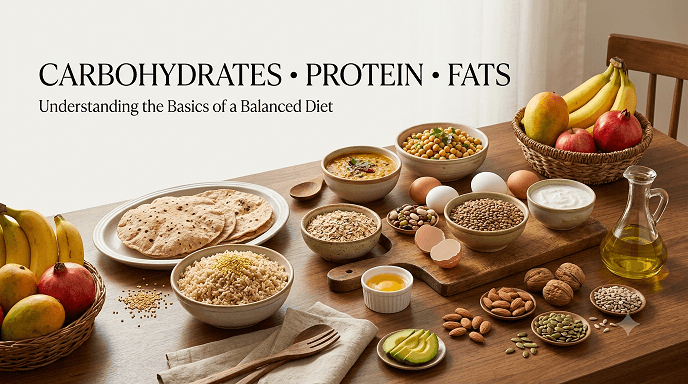
Carbohydrates, proteins, and fats are essential macronutrients that work together rather than in competition to support the body's overall health. Instead of cutting entire nutrient groups out, a healthy diet relies on balance, diversity, and choices tailored to individual lifestyle needs.
Abhinav Sharma
Introduction:
When people talk about healthy eating, three nutrients appear again and again: carbohydrates, protein and fats.
They are known as macronutrients because the body needs them in relatively larger amounts than vitamins and minerals. Each has different functions, but they also work together as part of an overall diet.
Unfortunately, nutrition discussions can sometimes make these nutrients sound like they are competing with each other.
Carbohydrates are sometimes described as something to avoid. Protein is often presented as the key to a healthy diet. Fat may be labelled either "good" or "bad" depending on the latest trend.
The reality is more practical.
A healthy diet is not simply about removing one macronutrient. According to the World Health Organization (WHO), healthy eating is based on adequacy, balance, moderation and diversity, with the right combination depending on factors such as age, lifestyle, physical activity, culture and individual needs.
Understanding what carbohydrates, protein and fats actually do can make everyday food choices easier.
What Are Macronutrients?
Macronutrients are nutrients that provide energy and support essential functions in the body.
The three major macronutrients are:
- Carbohydrates
- Protein
- Fats
Carbohydrates and protein provide about 4 calories per gram, while fat provides about 9 calories per gram.
But calories are only one part of the picture.
These nutrients also have different roles in the body.
Carbohydrates are an important source of energy.
Protein provides amino acids that the body uses to build and maintain tissues and produce functional molecules such as enzymes and hormones.
Fats provide energy, help form cell structures and supply essential fatty acids.
The important question isn't simply "Which macronutrient is best?"
It is:
"What foods are providing these nutrients, and how do they fit into my overall diet?"
1. Understanding Carbohydrates
Carbohydrates are one of the body's primary sources of energy.
They are found in many foods, including:
- Rice
- Wheat
- Oats
- Millets
- Potatoes
- Fruits
- Vegetables
- Beans
- Lentils
- Bread
- Pasta
Carbohydrates include sugars, starches and dietary fiber.
This is important because not all carbohydrate-containing foods have the same nutritional value.
A bowl of oats, a serving of lentils or a piece of fruit provides more than carbohydrate alone. These foods can also provide fiber, vitamins, minerals and other beneficial compounds.
By comparison, many highly refined foods and sugary drinks can provide substantial amounts of easily digested carbohydrate while offering fewer beneficial nutrients.
WHO recommends that carbohydrates should primarily come from whole grains, vegetables, fruits and pulses.
Harvard's Nutrition Source similarly emphasizes that the quality of carbohydrate matters, with minimally processed whole grains, vegetables, fruits and beans generally being preferable to highly refined carbohydrate sources.
So the question doesn't always need to be:
"Should I eat carbohydrates?"
A more useful question is:
"Which carbohydrate-rich foods am I choosing?"

2. Why Dietary Fiber Matters
Fiber is a type of carbohydrate that the body does not fully digest.
It is naturally found in foods such as:
- Fruits
- Vegetables
- Whole grains
- Beans
- Chickpeas
- Lentils
- Nuts and seeds
Fiber contributes to a healthy diet and is one reason whole or minimally processed carbohydrate sources can be nutritionally different from refined foods.
WHO recommends that people over 10 years of age aim for at least 400 grams of fruits and vegetables per day and at least 25 grams of naturally occurring dietary fiber daily, with different targets for younger children.
These are population-level recommendations, not personalized prescriptions.
For someone making everyday food choices, a simple practical approach is to include a variety of vegetables, fruits, pulses and whole grains rather than focusing only on counting carbohydrate grams.
3. Understanding Protein
Protein is often associated with muscles, but its role is much broader.
Protein provides amino acids that the body uses to build and maintain tissues and produce important functional molecules.
Protein is found in both animal and plant foods.
Animal Sources
Examples include:
- Eggs
- Milk
- Curd
- Fish
- Chicken
- Other meats
Plant Sources
Examples include:
- Lentils
- Chickpeas
- Beans
- Soy
- Tofu
- Peas
- Nuts
- Seeds
For many people, a combination of different protein sources can make meals more varied and nutritious.
WHO notes that protein can come from both animal and plant sources and that dietary needs vary depending on factors such as age and activity level.
This is one reason a general recommendation such as "everyone should eat exactly X grams of protein" can be misleading.
Protein requirements are influenced by individual circumstances.
4. Does More Protein Always Mean Better?
Protein is important, but more isn't automatically better.
People who exercise regularly, are building or maintaining muscle, are growing, or have particular dietary requirements may have different protein needs.
At the same time, a balanced diet involves more than protein alone.
A meal consisting almost entirely of protein may leave less room for vegetables, whole grains, fruits and other nutritious foods.
WHO notes that protein intake may be higher for certain groups, including adolescents and people actively building or maintaining significant muscle mass, while excessive intake can also have health implications.
If you have kidney disease, are pregnant, are managing a medical condition or have been advised to follow a specific diet, protein requirements should be discussed with an appropriate healthcare professional rather than determined from a general article.

5. Understanding Dietary Fats
For a long time, dietary fat was often treated as something that should simply be avoided.
That is an oversimplification.
Fat is an essential nutrient.
It provides energy, contributes to cell structure and supplies essential fatty acids that the body cannot produce on its own.
Fat can come from foods such as:
- Nuts
- Seeds
- Avocado
- Fish
- Vegetable oils
- Dairy products
- Eggs
- Meat
But, as with carbohydrates, the type and source matter.
WHO recommends emphasizing unsaturated fats and limiting saturated and trans fats.
Examples of foods containing unsaturated fats include fish, nuts, seeds and many vegetable oils.
6. Saturated Fat and Trans Fat
Not all fats should be treated the same way.
Saturated fats are found in foods including butter, ghee, fatty meats, cream and some other animal and plant sources.
Industrial trans fats can occur in some processed and fried foods and are considered particularly undesirable.
WHO recommends limiting saturated fat to 10% or less of total energy intake and trans fat to 1% or less, while encouraging replacement of saturated fats with unsaturated fats where appropriate.
This doesn't mean that a single food containing saturated fat automatically makes a diet unhealthy.
Overall dietary patterns matter.
A more practical approach is to look at what you eat regularly rather than becoming anxious about one ingredient in one meal.

7. How the Three Macronutrients Work Together
It can be tempting to think of carbohydrates, protein and fats as separate categories.
In reality, most meals contain combinations of them.
Consider a simple Indian meal:
Dal + roti + vegetable sabzi + curd
The meal can provide:
- Carbohydrates from roti and other plant foods
- Protein from dal and curd
- Fats depending on the ingredients and cooking oil
- Fiber, vitamins and minerals from vegetables, pulses and whole grains
Similarly:
Rice + rajma + vegetables
can provide carbohydrates, plant protein, fiber and other nutrients together.
This is why building meals around food combinations can be more practical than trying to isolate individual nutrients.
8. What Does a Balanced Plate Look Like?
You don't necessarily need to calculate every gram of carbohydrate, protein and fat to eat more thoughtfully.
A simple plate-based approach can be easier.
For many meals, consider including:
Vegetables and Fruits
Add a variety of vegetables and fruit across the day.
Whole or Minimally Processed Carbohydrates
Consider foods such as whole grains, oats, brown rice, millets, beans and other pulses.
Protein Sources
Include foods such as dal, beans, curd, eggs, fish, poultry, tofu, nuts or seeds according to your preferences and dietary pattern.
Healthy Sources of Fat
Use appropriate amounts of foods containing unsaturated fats, such as nuts, seeds, fish and suitable vegetable oils.
Harvard's Healthy Eating Plate similarly emphasizes vegetables and fruits, whole grains, healthy protein sources and healthy fats rather than focusing on eliminating an entire macronutrient category.
9. Quality Often Matters More Than Labels
Foods are often labelled "high-carb," "high-protein" or "low-fat."
Those labels can be useful, but they don't tell the whole story.
For example, two foods may contain carbohydrates but have very different nutritional profiles.
One could be a whole grain containing fiber and other nutrients.
Another could be a highly processed snack containing refined starch, added sugar and significant sodium.
Likewise, two protein-rich foods can differ considerably in their overall nutritional composition.
Instead of focusing on a single nutrient, consider the whole food.
Ask:
- Is it minimally processed?
- Does it provide fiber?
- Does it contain useful vitamins and minerals?
- Is it high in added sugar or sodium?
- What type of fat does it contain?
- How does it fit into the rest of my meal?
This approach aligns with the broader emphasis from WHO and Harvard on dietary quality and variety.
10. Common Myths About Carbohydrates, Protein and Fats
Myth 1: All Carbohydrates Are Bad
Reality: Carbohydrates are an important source of energy. Whole grains, fruits, vegetables and pulses can be nutritious carbohydrate sources.
Myth 2: You Should Avoid All Fat
Reality: Fat is an essential nutrient. The type of fat matters, and unsaturated fats are generally preferred over saturated and trans fats.
Myth 3: More Protein Is Always Better
Reality: Protein requirements vary, and excessive intake isn't automatically beneficial.
Myth 4: Healthy Eating Means Counting Every Gram
Reality: For many people, improving overall food quality, variety and balance can be a more practical starting point than tracking every nutrient.
11. Practical Ways to Improve Your Everyday Meals
You don't need to completely change your diet overnight.
Instead, try a few manageable changes.
Choose
whole grains more often.
Consider oats, whole-wheat products, brown rice or millets alongside the grains
your family already enjoys.
Include
pulses regularly.
Dal, beans and chickpeas can provide protein, fiber and other nutrients.
Add
more vegetables.
Try to include different colors and varieties across the week.
Choose
healthier fat sources.
Nuts, seeds, fish and appropriate vegetable oils can contribute unsaturated
fats.
Reduce
highly processed foods.
Foods high in free sugars, unhealthy fats or sodium are best consumed less
often.
Don't
eliminate entire food groups without a reason.
A varied diet can make it easier to meet nutritional needs.
WHO emphasizes that healthy diets are based on variety, balance, moderation and adequacy rather than one universal eating pattern.
Inkauras Insight
Carbohydrates, protein and fats aren't three competing sides of nutrition. They are three important parts of it.
The bigger picture is the quality and variety of the foods that provide them.
Instead of asking:
"Should I stop eating carbohydrates?"
or
"Should I eat as much protein as possible?"
try asking:
"What does my overall diet look like?"
A meal containing whole grains or other nutritious carbohydrates, a suitable protein source, vegetables or fruit, and an appropriate source of healthy fat can be a much more useful way to think about everyday nutrition.
Small improvements repeated over time are often more practical than extreme dietary rules.
Final Thought
Understanding nutrition doesn't have to mean memorizing complicated formulas.
Start with the basics.
Carbohydrates help provide energy.
Protein provides building blocks for the body's tissues and functions.
Fats provide energy, essential fatty acids and support important bodily functions.
None of these nutrients needs to be viewed as the enemy.
What matters is choosing nutritious food sources, maintaining variety and considering the overall pattern of your diet.
Your nutritional needs can change with age, activity level, health status and other circumstances. So rather than following a restrictive diet simply because it is popular, focus on building meals that are varied, balanced and realistic for your lifestyle.
Good nutrition is less about fearing individual nutrients and more about understanding how different foods work together.
Important Disclaimer
This article is intended for general nutrition and food-education purposes only. It is not medical, dietary or individualized nutrition advice.
Nutritional requirements vary based on age, sex, activity level, pregnancy or breastfeeding status, health conditions, medications, allergies, dietary preferences and other individual factors.
The nutrient ranges and recommendations referenced from WHO are population-level guidance and should not be interpreted as a personalized diet plan.
People with diabetes, kidney disease, cardiovascular conditions, eating disorders, food allergies, pregnancy-related nutritional needs or other medical conditions should consult an appropriately qualified healthcare professional or registered dietitian before making significant dietary changes.
Food labels, dietary recommendations and nutritional requirements can also vary by country and may be updated as scientific guidance evolvesRate this article
Sign in to rate this article.