
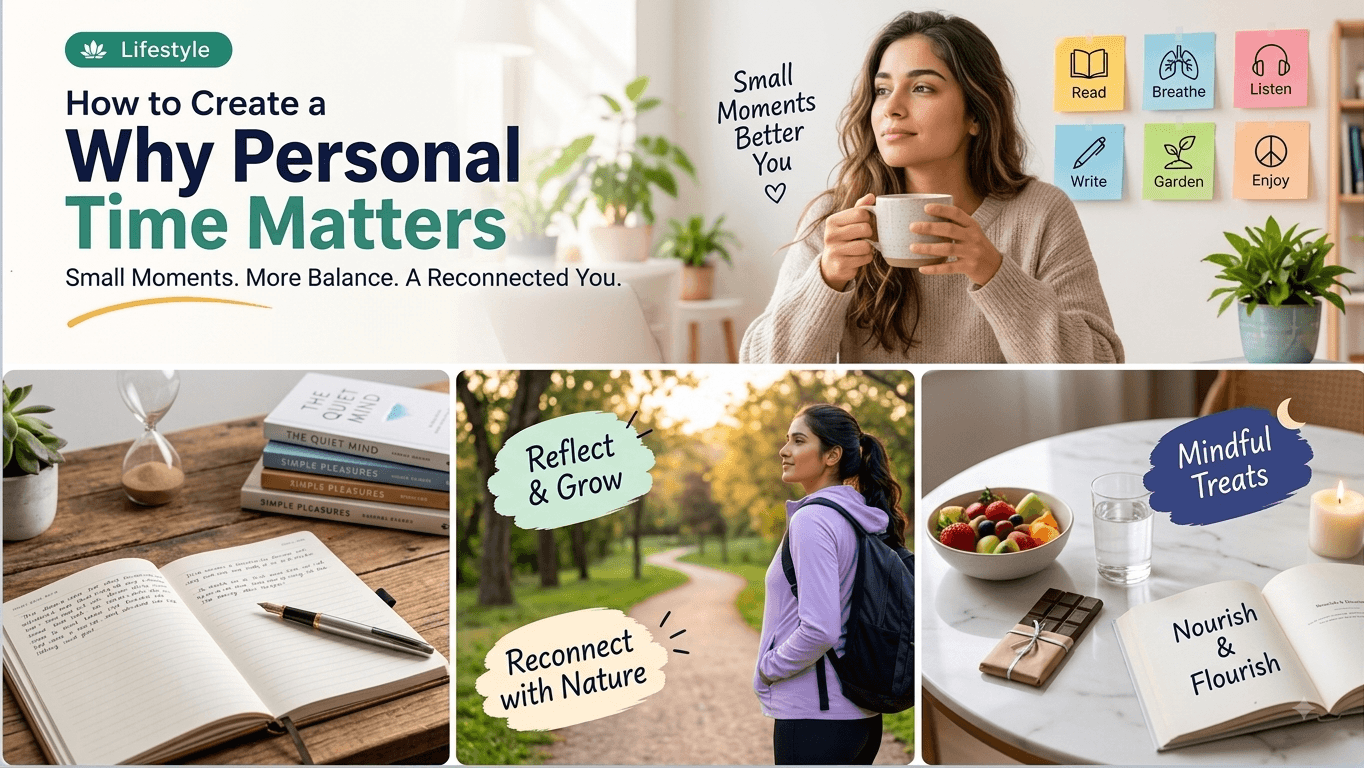
Why Personal Time Matters
When daily responsibilities accumulate, personal time is often the first thing sacrificed, yet taking space for yourself is essential rather than selfish. Finding realistic, small ways to rest and reconnect helps balance everyday demands and support long-term well-being.
Abhinav Sharma
Introduction
When life gets busy, personal time is often the first thing we sacrifice.
Work needs attention. Family responsibilities keep growing. Messages keep arriving. There are errands to complete, appointments to attend and countless small tasks waiting at the end of the day.
Eventually, we may find ourselves saying:
“I don't have time for myself.”
Personal time can easily feel unnecessary when there are more important things to do. But taking some time for yourself isn't necessarily about being selfish or avoiding responsibilities.
It can simply mean creating a little space to rest, reflect, enjoy something you like or reconnect with yourself.
The amount of personal time each person needs will be different. What matters is finding a realistic way to include some of it in everyday life.
What Does Personal Time Actually Mean?
Personal time is time you intentionally set aside for yourself, rather than spending it entirely on work, household responsibilities or other people's needs.
It doesn't necessarily mean spending hours alone.
Personal time could be:
- Reading a book
- Going for a walk
- Listening to music
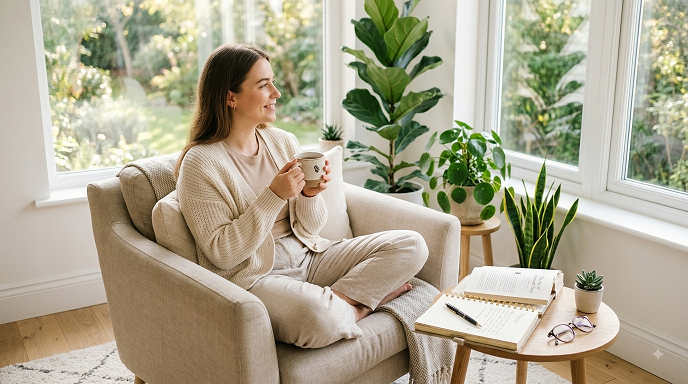
- Having a quiet cup of tea
- Exercising
- Gardening
- Writing in a journal
- Pursuing a hobby
- Sitting quietly without doing anything
- Meeting a friend
- Learning something you enjoy
The activity itself isn't the most important part.
The important part is that the time has a purpose that matters to you.
NIMH describes self-care as making time for activities that help support physical and mental health and notes that these activities can include relaxation, hobbies, exercise, sleep and spending time with people who provide support.
1. Personal Time Gives Your Mind a Break
Our attention is constantly being used.
At work, we solve problems and make decisions.
At home, we manage responsibilities.
Our phones add another stream of notifications, messages and information.
Even when we're physically resting, our minds may still be processing everything that happened during the day.
Personal time can create an opportunity to step away from those demands.
It doesn't mean your mind will suddenly become completely quiet. Instead, you're giving yourself some time where the focus isn't necessarily on completing the next task.
Something as simple as sitting outside, taking a walk or listening to music can create a different rhythm from a busy working day.
2. It Can Help You Notice How You're Actually Feeling
When you're constantly occupied, it's surprisingly easy to ignore your own feelings.
You may know that you're tired but keep working.
You may feel frustrated but move on to the next responsibility.
You may feel overwhelmed but tell yourself you'll deal with it later.
A little personal time can create space to ask:
“How am I actually doing?”
You might realise that you need more rest.
Perhaps you've been spending too much time on work.
Maybe you haven't spoken to someone you care about.
Or perhaps you simply need an evening without a long list of obligations.
This kind of self-awareness doesn't solve every problem, but it can help you recognise what needs attention.
3. Personal Time Can Support Stress Management
Stress is a normal part of life, but persistent or overwhelming stress can affect everyday well-being.
NIMH recommends several approaches to coping with stress, including exercise, journaling, relaxation activities, maintaining sleep routines and spending time with supportive people.
Personal time can make room for some of these activities.
For example:
20-minute walk → movement
Reading → relaxation
Journaling → reflection
Meeting a friend → social connection
Quiet breathing → relaxation
There is no single activity that works for everyone.
NIMH also emphasises that finding useful coping strategies can involve some trial and error.
4. It Helps You Remember That You Are More Than Your Responsibilities
It's easy to define yourself by what you do.
Employee.
Parent.
Partner.
Business owner.
Caregiver.
Manager.
Student.
These roles are important, but they aren't the whole of who you are.
Personal time gives you an opportunity to reconnect with interests and parts of your identity that may not be directly connected to your responsibilities.
Maybe you enjoyed photography before work became demanding.
Maybe you used to read regularly.
Maybe you enjoy cooking, painting, gardening, travelling or simply exploring new places.
Those interests don't have to disappear just because life becomes busy.
5. Personal Time Can Make Space for Hobbies
A hobby doesn't have to become another achievement.
You don't need to become an expert.
You don't have to monetise it.
You don't even need to be particularly good at it.
You can simply enjoy it.
Reading ten pages.
Playing an instrument for 15 minutes.
Sketching.
Cooking something new.
Taking photographs during an evening walk.
Growing a few plants.
These small activities can give your day something to look forward to.
NIMH specifically suggests activities people enjoy, including reading, spending time in nature and engaging in low-stress hobbies as part of caring for mental health.
6. Personal Time Doesn't Always Mean Being Alone
There is a common idea that “me time” means sitting alone somewhere.
That's not necessarily true.
For some people, personal time might mean meeting a close friend.
For someone else, it might mean having coffee with a partner without discussing work.
It could be a walk with a family member, an evening hobby group or a conversation with someone you trust.
The key question is:
Does this time help you feel connected, refreshed or more like yourself?
If yes, it can be valuable personal time.
Maintaining supportive relationships is also included among NIMH's recommendations for caring for mental health.
7. You Don't Need Hours of Free Time
One of the biggest misconceptions about personal time is that you need a large block of uninterrupted time.
You don't necessarily need two free hours every day.
Start with 10–20 minutes.
For example:
Morning
10 minutes with your tea or coffee before the day becomes busy.
Afternoon
A short walk away from your desk.
Evening
20 minutes reading, listening to music or pursuing a hobby.
Weekend
One longer activity that you genuinely enjoy.
The amount isn't as important as making the time intentional and realistic.
NIMH notes that even small acts of self-care can contribute to physical and mental well-being.
8. Put Personal Time on Your Calendar
If something is important but has no place in your schedule, it can easily get pushed aside.
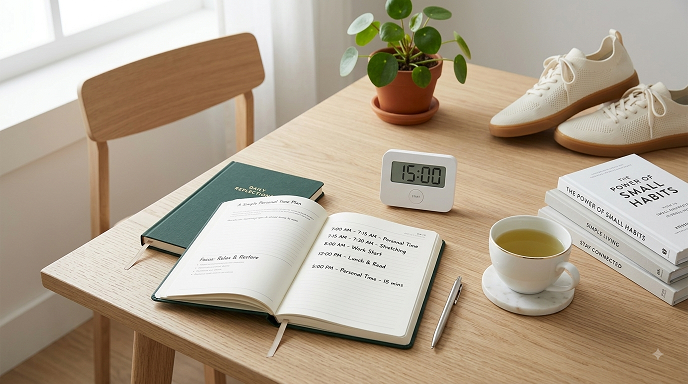
Try treating personal time like another appointment.
For example:
7:00–7:20 PM — Walk
8:30–9:00 PM — Reading
Saturday morning — Hobby
This doesn't mean you need to create a rigid schedule.
It simply makes personal time visible.
And if something genuinely important comes up, adjust it.
The objective is not perfection.
It's creating a pattern that you can realistically maintain.
9. Learn to Say “Not Now”
Sometimes the problem isn't a lack of time.
It's that too many things are competing for your attention.
You may accept every request.
Attend every optional meeting.
Respond to every message immediately.
Take on additional responsibilities because you don't want to disappoint anyone.
Over time, there may be very little space left for yourself.
NIMH recommends setting goals and priorities, deciding what needs to be done now and what can wait, and learning to say “no” when you're taking on too much.
Saying “not now” doesn't mean saying “no” forever.
It simply means recognising that your time has limits too.
10. Don't Turn Personal Time Into Another Productivity Goal
This is particularly important.
You don't need to spend personal time learning a new skill, exercising, reading a certain number of books or improving yourself.
Sometimes personal time can simply be:
Doing nothing productive.
Sitting on the balcony.
Listening to music.
Watching the sunset.
Having a cup of tea.
Taking a slow walk.
Looking through old photographs.
Resting.
Not every minute of the day needs to produce a measurable result.
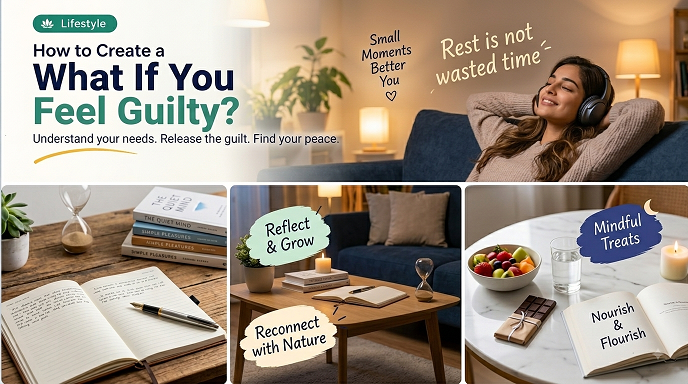
What If You Feel Guilty?
This is common.
You may think:
“I should be working.”
“There are still things to do.”
“Someone else needs me.”
That feeling doesn't necessarily mean you're doing something wrong.
If your responsibilities are being handled and you've created a reasonable amount of time for yourself, rest and recreation don't have to be viewed as wasted time.
The American Psychological Association has highlighted the difficulty some people experience when trying to make time for themselves, including feelings of guilt or concern that self-care is counterproductive.
You can care about other people and make reasonable space for yourself.
Those ideas don't have to conflict.
A Simple Personal-Time Plan
If you aren't currently making much time for yourself, start small.
Step 1 — Choose one activity
Pick something you genuinely enjoy.
Step 2 — Start with 15 minutes
Don't wait for a completely free afternoon.
Step 3 — Choose a realistic time
Morning, lunch break, evening or weekend.
Step 4 — Protect the time
Avoid unnecessary interruptions where possible.
Step 5 — Notice how you feel
Ask yourself whether the activity helped you feel calmer, refreshed, connected or simply happier.
Step 6 — Adjust
If it doesn't work, try something else.
There is no universal formula for personal time.
When Personal Time Isn't Enough
Personal time can support everyday well-being, but it isn't a replacement for professional help when someone is experiencing significant or persistent mental-health difficulties.
NIMH recommends seeking professional help when symptoms are severe, distressing, persist for two weeks or more, or interfere with normal activities.
If you are struggling to function normally, experiencing persistent emotional distress or noticing significant changes in sleep, appetite, concentration or interest in everyday activities, consider speaking with an appropriately qualified healthcare or mental-health professional.
Inkauras Insight
Personal time doesn't have to be expensive.
It doesn't require a holiday.
It doesn't require a perfect morning routine.
And it doesn't have to look impressive on social media.
Sometimes it is simply 20 quiet minutes that belong to you.
The purpose isn't to escape your responsibilities.
It's to create enough space to return to them with a little more energy, awareness and balance.
A Small Challenge for This Week
Try giving yourself 20 minutes a day for seven days.
During those 20 minutes:
- Don't work.
- Don't complete household chores.
- Don't try to be productive.
- Don't feel obligated to improve yourself.
Instead, choose something that genuinely feels restorative or enjoyable.
At the end of the week, ask:
“Did these 20 minutes make any difference to how I experienced my day?”
Your answer may tell you more about the kind of personal time you need.
Final Thoughts
Personal time isn't about putting yourself above everyone else.
It's about recognising that your needs matter too.
A balanced lifestyle includes responsibilities, relationships, work and personal interests.
If every available minute goes toward serving other priorities, it becomes difficult to maintain that balance.
You don't need to completely redesign your life. Start with a small window.
Read.
Walk.
Listen.
Create.
Reflect.
Rest.
Connect.
Do something simply because you enjoy it.
Make a little room for yourself—not because you have nothing else to do, but because you are part of the life you're trying so hard to manage.
Lifestyle Disclaimer
This article is intended for general lifestyle and educational information only. It is not personalised medical, psychological or professional advice.
Personal needs and circumstances vary. If you are experiencing persistent stress, emotional difficulties, sleep problems or other symptoms that interfere with your everyday life, consider speaking with an appropriately qualified healthcare or mental-health professional.
Share your thought in the comment section.
Rate this article
Sign in to rate this article.