
Why Protein Matters in Your Daily Diet
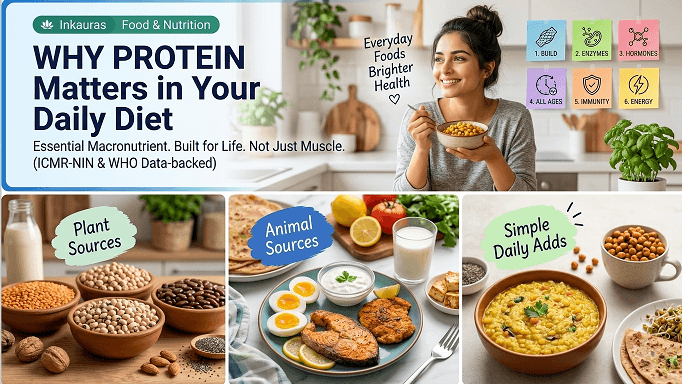
Protein is an essential macronutrient that plays a vital role in building tissues, enzymes, and hormones for everyday health—not just muscle building. You can easily meet your daily needs through whole, everyday foods like lentils, dairy, eggs, nuts, and seeds without relying on supplements.
InkAuras
Introduction
Protein is often associated with gyms, muscle-building and protein shakes.
But protein isn't only for athletes.
It is one of the three major macronutrients, along with carbohydrates and fats, and it plays an important role in everyday nutrition. Our bodies use protein as a building material for tissues and as part of many enzymes, hormones and other functional molecules.
The good news is that getting protein doesn't necessarily mean buying supplements or following a high-protein diet.
For most people, everyday foods such as dal, beans, chickpeas, milk, curd, eggs, fish, poultry, soy, nuts and seeds can contribute to protein intake.
So, why does protein matter, and how can you include it sensibly in your daily meals?
What Is Protein?
Protein is made up of smaller building blocks called amino acids.
Our bodies can make some amino acids themselves, while others—known as essential amino acids—need to come from food.
Protein is found throughout the body. It contributes to muscles, bones, skin and other tissues, while also forming part of enzymes and other molecules involved in normal body functions.
This is why protein isn't simply a "muscle nutrient."
It is part of the basic nutritional foundation of a healthy diet.
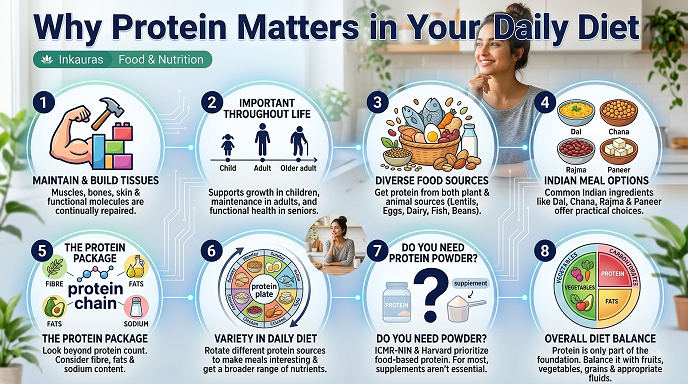
1. Protein Helps Maintain and Build Body Tissues
One of protein's best-known roles is supporting the body's tissues.
Muscles, for example, are continually being maintained and repaired. Adequate protein as part of an overall balanced diet provides the amino acids needed for these processes.
This becomes particularly relevant during periods of growth and development and for people who are physically active.
However, it is important not to interpret this as "more protein equals more muscle."
Muscle development also depends on factors such as physical activity, total energy intake, training, recovery and overall diet.
Protein is important, but it is only one part of the picture.
2. Protein Is Important Throughout Life
Protein isn't something that suddenly becomes important when you start exercising.
Children need nutrients to support growth and development. Adults need them to maintain body tissues and normal functions. Older adults may also have particular nutritional considerations.
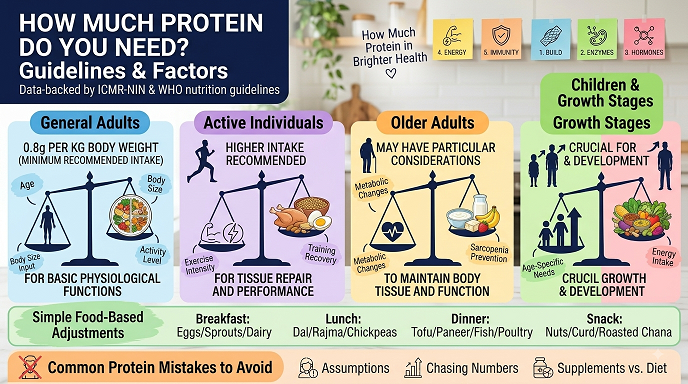
The amount of protein an individual needs can vary according to factors such as age, body size, activity level, pregnancy or breastfeeding status and health conditions.
The World Health Organization notes that a healthy diet needs to provide adequate amounts of protein along with other nutrients and that dietary needs vary between individuals.
This is one reason why a single protein target shouldn't automatically be applied to everyone.
3. Protein Can Come From Many Foods
You don't need to depend on one particular food to get protein.
Plant-based sources include:
- Dal and lentils
- Chickpeas and other beans
- Rajma
- Soybeans and tofu
- Peas
- Nuts
- Seeds
- Whole grains
Animal-based sources include:
- Eggs
- Milk
- Curd and yogurt
- Fish
- Chicken and other poultry
- Meat
ICMR-NIN's Dietary Guidelines for Indians 2024 includes pulses, beans, milk and curd, nuts and other foods among the components of balanced diets, while noting that varied vegetarian diets can provide adequate protein.
This means that both vegetarian and non-vegetarian diets can include useful protein sources.
4. Indian Meals Already Offer Many Protein Options
One advantage of traditional Indian food is that protein-rich ingredients are already familiar to many households.
Think about an ordinary meal:
Dal + rice + vegetables
or
Roti + chana + curd
or
Rajma + rice
or
Roti + paneer + vegetables
or
Eggs + roti + vegetables
The objective doesn't have to be creating a completely different diet.
Sometimes the simpler approach is to look at your existing meals and identify where a protein-rich food can be included.
ICMR-NIN's 2024 dietary guidelines specifically discuss combining cereals and pulses as one way of improving the quality of protein in vegetarian diets.
5. The "Protein Package" Matters
When choosing protein foods, it is useful to look beyond the protein number on the nutrition label.
A food doesn't contain protein alone.
It may also contain:
- Fiber
- Fats
- Saturated fat
- Sodium
- Vitamins
- Minerals
- Added sugars
- Other nutrients
Harvard's Nutrition Source describes this as the "protein package"—the other nutrients and components that come along with a particular protein source.
For example, lentils provide protein along with fiber, while some processed meat products can provide protein alongside substantial amounts of sodium and saturated fat.
Therefore, asking "How much protein does this food have?" is useful.
But asking "What else comes with that protein?" can be even more helpful.
6. Variety Can Make Your Diet Better
There is no requirement to eat the same protein source every day.
In fact, variety can make meals more interesting and help provide a broader range of nutrients.
You could rotate between:
Monday: Dal
Tuesday: Chana
Wednesday: Eggs
Thursday: Rajma
Friday: Fish or tofu
Saturday: Paneer or curd
Sunday: Beans or another preferred source
This is only an example—not a prescribed meal plan.
The basic idea is simple:
Don't become overly dependent on one food.
Harvard's nutrition guidance recommends a variety of healthy protein sources, including beans, nuts, tofu, fish, poultry and eggs.
7. Do You Need Protein Powder?
Protein powder has become extremely popular, particularly among people who exercise.
But a protein supplement isn't automatically necessary just because you exercise.
ICMR-NIN's Dietary Guidelines for Indians 2024 states that most athletes can obtain recommended amounts of protein through food alone and discusses protein powders as supplements rather than essential components of a normal diet.
Harvard also recommends prioritizing protein-rich foods and notes that some protein powders may contain added sugars, sweeteners and other ingredients.
For someone considering a supplement, the right question isn't simply:
"Which protein powder is best?"
It should first be:
"Do I actually need a supplement based on my diet and individual needs?"
If you're unsure, particularly if you have a medical condition or specific nutritional goals, a qualified dietitian or healthcare professional can provide personalized guidance.
8. Don't Forget the Rest of Your Diet
Protein is important, but a healthy diet isn't built around protein alone.
Your body also needs carbohydrates, fats, vitamins, minerals, fiber and adequate fluids.
The WHO recommends a diversified and balanced diet and emphasizes that healthy eating involves balancing different nutrients rather than focusing on a single component.
This means that a meal containing a large amount of protein isn't automatically healthier.
A more useful approach is to build meals that include a sensible combination of:
Protein + vegetables/fruits + whole or minimally processed carbohydrate sources + appropriate fats
The exact balance will depend on the individual.
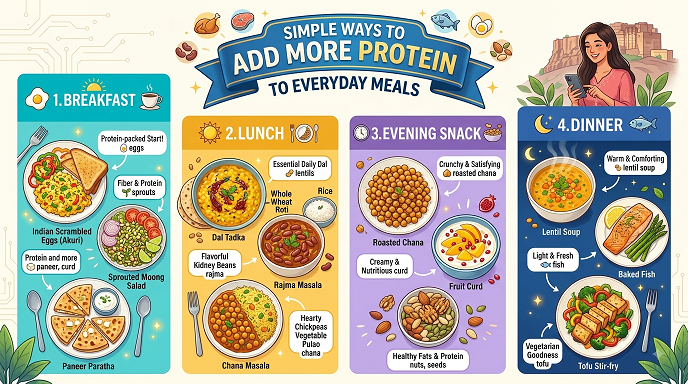
Simple Ways to Add More Protein to Everyday Meals
You don't necessarily need major dietary changes.
Try small adjustments such as:
Breakfast
Add eggs, milk, curd, paneer, sprouts or another preferred protein source.
Lunch
Include dal, rajma, chana, beans or another pulse alongside your usual meal.
Evening snack
Consider roasted chana, nuts, curd or another protein-containing option instead of relying only on highly processed snacks.
Dinner
Include a protein source such as dal, tofu, paneer, eggs, fish or poultry along with vegetables and your preferred grain.
For vegetarian meals
Use a variety of pulses, beans, soy foods, dairy, nuts, seeds and grains.
The goal isn't to make every meal "high protein."
It is simply to include a reasonable protein source as part of balanced meals.
How Much Protein Do You Need?
This is where many online nutrition discussions become confusing.
You may see different recommendations for different people.
Harvard's Nutrition Source cites a minimum adult intake of approximately 0.8 grams of protein per kilogram of body weight per day, while also noting that individual needs vary with factors such as age, exercise and health conditions.
WHO provides a broader general perspective, noting that protein needs form part of overall dietary requirements and that needs vary by individual circumstances.
ICMR-NIN's Dietary Guidelines for Indians 2024 provides food-group-based dietary patterns for different body weights, ages and activity categories rather than suggesting that everyone should simply consume the same amount.
So rather than chasing a number from social media, consider your age, body size, activity level, dietary pattern and health situation.
For personalized nutrition targets, consult a qualified dietitian or healthcare professional.
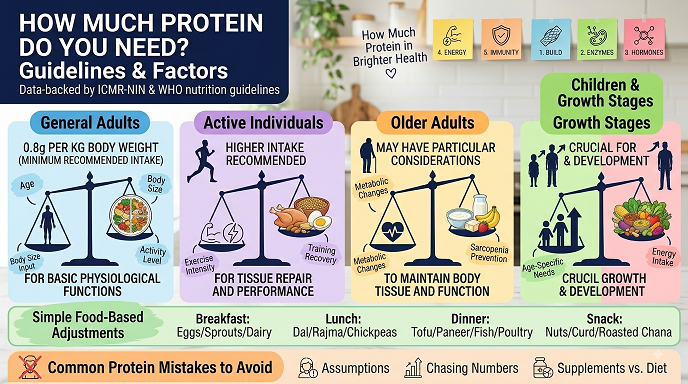
Common Protein Mistakes to Avoid
Mistake 1: Assuming more is always better
More protein isn't automatically better for everyone.
Mistake 2: Focusing only on grams
The overall food source and the rest of the meal matter too.
Mistake 3: Ignoring plant sources
Dal, beans, soy, nuts and seeds can all contribute useful protein.
Mistake 4: Replacing a balanced diet with supplements
Protein powder is a supplement—not a substitute for a varied diet.
Mistake 5: Forgetting other nutrients
A diet shouldn't become so focused on protein that vegetables, fruits, whole grains, healthy fats and fiber are neglected.
Inkauras Insight
You don't need to turn your kitchen into a sports-nutrition laboratory to eat enough protein.
Start with the food you already know.
Dal. Chana. Rajma. Eggs. Curd. Paneer. Soy. Fish. Nuts. Seeds.
Look at your usual meals and ask:
"Where is my protein source?"
If the answer is consistently "there isn't much," a simple food-based adjustment may be more useful than immediately buying a supplement.
Final Thoughts
Protein matters because it supports many basic functions of the body and forms an important part of a balanced diet.
But healthy eating isn't about chasing the highest protein number.
It's about quality, variety and balance.
For many people, everyday foods can provide protein without requiring complicated diets or expensive supplements.
So the next time you prepare a meal, don't just think about whether it tastes good.
Think about the whole plate.
Add a protein source. Include vegetables or fruit. Choose quality carbohydrates and appropriate fats. And keep your overall diet varied.
Good nutrition doesn't have to be complicated.
Sometimes, it starts with making a slightly better choice at the next meal.
Food & Nutrition Disclaimer
This article is intended for general educational and informational purposes only. It is not personalized medical, nutritional or dietary advice.
Individual protein requirements can vary depending on age, body size, physical activity, pregnancy or breastfeeding, dietary pattern and health conditions. People with kidney disease, liver disease, food allergies, eating disorders, or other medical or nutritional concerns should seek guidance from an appropriately qualified healthcare professional or registered dietician before making significant dietary changes.
Do not use this article to diagnose, treat or manage a medical condition.Rate this article
Sign in to rate this article.