
Why Do Small Problems Sometimes Feel Huge?
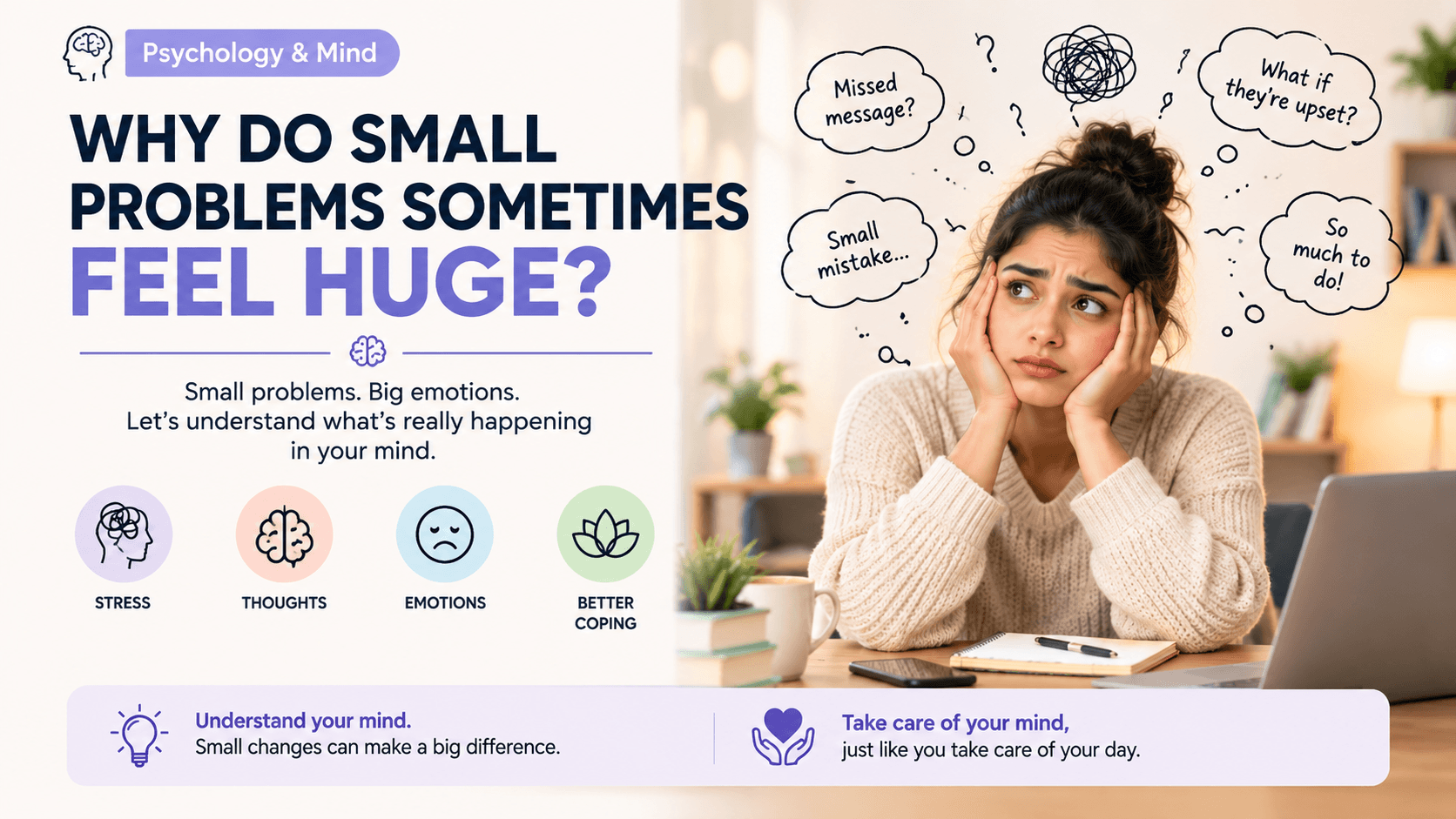
When a minor issue triggers an unexpectedly intense emotional reaction, it is rarely just about that single moment. Instead, it often reflects a build-up of underlying stress that makes small frustrations feel far more overwhelming than usual.
Abhinav Sharma
Introduction
Have you ever had a day when one small problem suddenly felt like the last straw?
Maybe your internet stopped working, someone sent you an irritating message, you made a small mistake at work, or you couldn't find something you needed.
Normally, you might handle the situation without much difficulty.
But on a stressful day, that same problem can feel disproportionately frustrating. You may become unusually angry, anxious, upset or overwhelmed.
It can leave you wondering:
"Why am I reacting so strongly to something that isn't really that serious?"
The answer isn't necessarily that you're overreacting.
Sometimes, the small problem isn't the whole story.
The Problem May Be Smaller Than the Stress Around It
Imagine carrying a backpack throughout the day.
One book isn't particularly heavy. Another book isn't either. But after adding several books, a laptop, a water bottle and other items, the backpack becomes difficult to carry.
Daily stress can work in a similar way.
Research on daily hassles—the minor difficulties and inconveniences of everyday life—suggests that these experiences can accumulate and are relevant to psychological well-being.
So when something small happens at the end of an already difficult day, your reaction may partly reflect everything that happened before it.
The argument isn't necessarily about the argument.
The delayed meeting isn't necessarily about the meeting.
The missing keys aren't necessarily about the keys.
Sometimes, your emotional "backpack" was already full.

1. Your Current Stress Level Changes How You Respond
The same event can feel very different depending on your mental state.
Consider two mornings.
On Monday, you slept well, finished your work early and have plenty of time.
On Tuesday, you are tired, running late, worried about a deadline and dealing with several unfinished tasks.
If your phone suddenly stops working on both days, your reaction may be completely different.
The event is similar.
Your internal situation isn't.
The National Institute of Mental Health explains that stress can result from external pressures and may become difficult when it feels overwhelming or starts interfering with everyday life.
This is one reason it can be useful to look beyond the immediate problem and ask:
"What else am I carrying today?"
2. Your Brain Doesn't Respond Only to the Size of the Problem
Our response to a situation can depend partly on how we perceive and evaluate it, not simply on what objectively happened.
The American Psychological Association's description of the transactional model of stress and coping explains that stress responses involve how a person evaluates a situation and their perceived ability to manage it.
For example:
Situation: Your manager asks you to correct a small mistake.
You might think:
"No big deal. I'll fix it."
Or:
"I'm always making mistakes. What if they think I'm incompetent?"
The external event is similar.
The meaning you attach to it is different.
This doesn't mean that you can simply "think positively" and make every difficult situation disappear. Rather, it shows why our interpretation of an event can influence how stressful it feels.
3. Lack of Sleep Can Make Difficult Days Feel More Difficult
When you're tired, your ability to concentrate, regulate emotions and handle everyday demands may be affected.
That means a small inconvenience can feel much harder to manage when you're already exhausted.
This is one reason sleep deserves attention when you're trying to understand changes in your mood.
Instead of asking only:
"Why did that little thing upset me so much?"
also consider:
- Did I sleep properly?
- Have I been working continuously?
- Have I had enough time to rest?
- Have I been dealing with several stressful situations recently?
Sometimes the solution isn't about fixing the small problem.
You may first need to reduce your overall load.
4. Small Problems Can Become the "Last Straw"
Imagine receiving several frustrating messages throughout the morning.
Then your computer freezes.
Then you discover you've forgotten something at home.
Finally, someone asks you to solve another problem.
The final event may be relatively minor, but it happens after several other frustrations.
This is sometimes described informally as the "last straw" effect.
Research into daily stressors has found that people's emotional responses to seemingly minor events can be associated with broader psychological well-being.
This is why it can be helpful to look at patterns rather than isolated moments.
If you find yourself becoming unusually upset repeatedly, don't automatically blame yourself for being "too sensitive."
Ask whether there is a larger source of stress that needs attention.
5. Feeling Overwhelmed Doesn't Mean You're Weak
One of the least helpful reactions can be:
"This is such a small problem. Why can't I handle it?"
That thought can create another layer of frustration.
You are now dealing with:
The original problem + frustration about your reaction to the problem.
Instead, try acknowledging what you're experiencing without judging yourself.
You might say:
"This feels bigger than it normally would. Maybe I'm already under a lot of pressure."
That doesn't mean you have to accept an unhelpful reaction.
It simply gives you an opportunity to understand it.
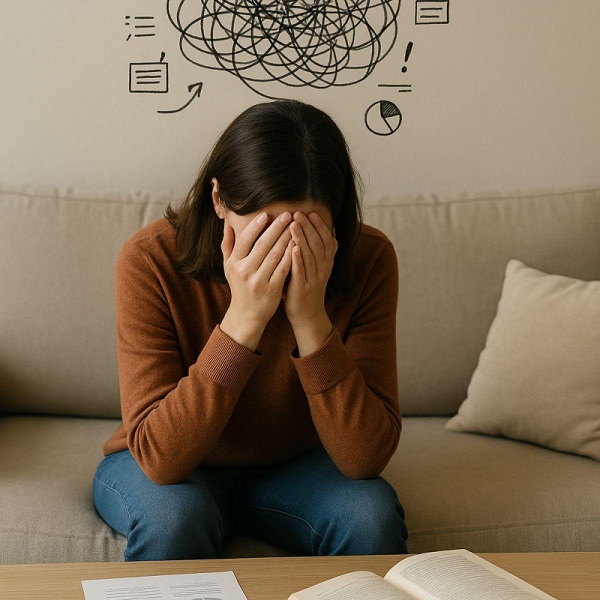
What Can You Do When a Small Problem Feels Huge?
You don't necessarily need a complicated technique.
Try a simple PAUSE approach.
P — Pause
Don't immediately react if you can avoid it.
Give yourself a moment.
A — Assess
Ask:
"What exactly happened?"
Separate the actual event from the thoughts surrounding it.
U — Understand
Ask yourself:
"What else might be contributing to how I feel?"
Are you tired? Stressed? Worried about something else?
S — Simplify
Focus on the next manageable action.
Instead of solving everything at once, ask:
"What is the one thing I can deal with right now?"
E — Evaluate
Once you've calmed down, consider whether the problem actually needs a response—or whether it can simply be allowed to pass.
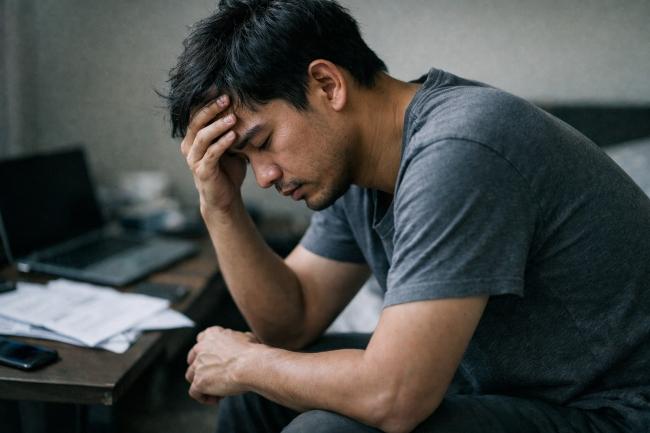
A Few Small Habits That Can Help
Managing everyday stress isn't about eliminating every difficult situation.
Instead, you can build habits that make stressful days more manageable.
Take short breaks
Step away from your work or surroundings for a few minutes when possible.
Write things down
If your mind feels crowded, writing down your concerns can help you see them more clearly.
Move your body
A walk or other physical activity can provide a useful break from a stressful situation.
Talk to someone
Speaking with a trusted friend, family member or professional can sometimes help put a problem into perspective.
Focus on what you can control
You may not be able to change everything happening around you, but you can often decide what your next action will be.
NIMH and NHS guidance both include practical approaches such as identifying stressors, physical activity, relaxation techniques, planning and seeking support when needed.

When Should You Take It More Seriously?
Everyone feels overwhelmed occasionally.
However, if feelings of stress, anxiety or being overwhelmed are persistent, difficult to manage or interfering with your work, relationships, sleep or everyday activities, it may be worth speaking with a qualified mental-health professional or healthcare provider.
NIMH notes that persistent anxiety or stress that interferes with everyday life deserves attention.
You don't need to wait until things become unbearable before asking for support.
Seeking professional help isn't an admission of weakness.
It's one way of taking your well-being seriously.
Inkauras Insight
Sometimes we look at a small problem and ask:
"Why am I making such a big deal out of this?"
A more useful question might be:
"What else might be making this feel so difficult today?"
That small change in perspective can help you move from self-criticism to self-understanding.
You may discover that the real issue isn't the spilled coffee, the delayed message or the minor mistake.
It may be exhaustion, accumulated stress, unresolved worry or simply having too much on your plate.
Understanding that doesn't make the problem disappear.
But it may help you respond to it with a little more patience.
A Simple Reflection for Today
The next time a small problem feels unusually big, stop for a moment and ask:
- What happened?
- What am I feeling?
- What else happened today?
- Am I tired or mentally overloaded?
- What part of this situation can I actually control?
- What is the next small step?
You don't have to solve your entire day.
Sometimes, you just need to make the next moment a little easier.

Final Thoughts
Small problems don't always feel small.
Our emotional response can be influenced by accumulated stress, tiredness, circumstances and the meaning we attach to what happened.
That doesn't mean every strong reaction is irrational, and it certainly doesn't mean that you should blame yourself for having emotions.
Instead, try to become curious about your reactions.
When a small problem feels huge, look beyond the problem.
There may be something else asking for your attention.
Important Mental Well-being Disclaimer
This article is intended for general educational and mental-wellness information only. It is not a diagnosis and should not be considered a substitute for professional psychological, psychiatric or medical advice.
People respond differently to stress and difficult situations. If feelings of anxiety, stress, sadness or being overwhelmed persist, become difficult to manage, or interfere with everyday life, consider speaking with a qualified mental-health professional or healthcare provider.Rate this article
Sign in to rate this article.