
Work-Life Balance
Simple Ways to Build a Healthier and Happier Everyday Life
Abhinav Sharma
Introduction
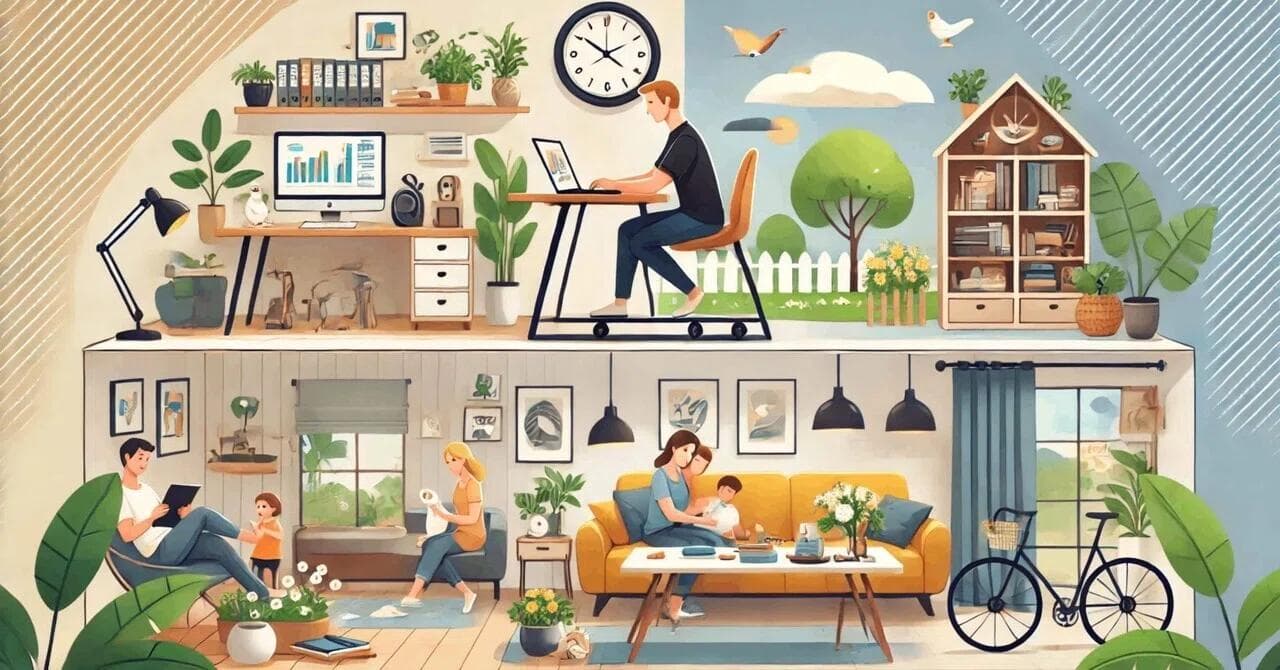
Modern life can sometimes feel like a never-ending list of responsibilities.
There is work to complete, family to take care of, household responsibilities to manage, messages to answer, and countless other things competing for our attention.
With smartphones and digital connectivity, work can also follow us home.
A quick email after dinner can turn into an hour of work. A weekend that was supposed to be relaxing can become a time to catch up on unfinished tasks.
Over time, this constant pressure can leave us feeling tired even when we haven't done anything physically demanding.
This is where work-life balance becomes important.
Work-life balance doesn't necessarily mean dividing your day equally between work and personal life.
It means creating a lifestyle where work, family, personal interests, health, and rest can coexist without one consistently taking over everything else.
What Does Work-Life Balance Really Mean?
Work-life balance means finding a healthy way to manage the different responsibilities and priorities in your life.
For one person, it may mean leaving work on time to spend the evening with family.
For another, it may mean finding time for exercise, hobbies, reading, or simply getting enough sleep.
There is no single formula that works for everyone.
The right balance depends on:
- Your profession
- Family responsibilities
- Personal priorities
- Health
- Stage of life
- Work schedule
The goal isn't a perfect balance every day.
The goal is to create a lifestyle that feels manageable and sustainable over time.
1. Start by Understanding Where Your Time Goes
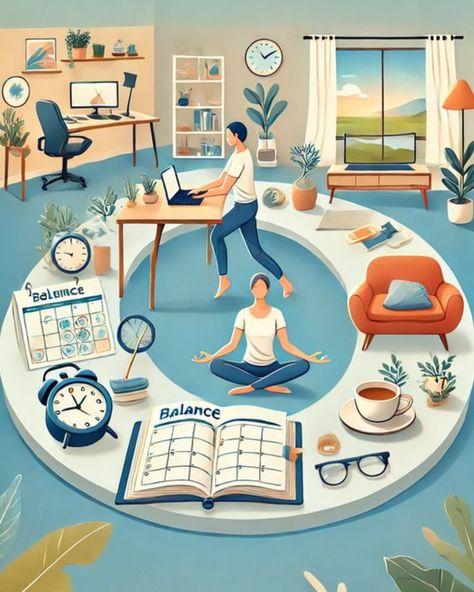
Before changing your routine, understand how you're currently spending your time.
For a few days, observe:
- How many hours do you spend working?
- How much time goes into commuting?
- How much time do you spend on your phone?
- How much time do you spend with family?
- Are you getting enough sleep?
- Do you have time for yourself?
You may discover that some activities are consuming much more time than you expected.
Even something as simple as spending several short periods checking social media throughout the day can add up.
2. Learn to Prioritize
Not everything on your to-do list deserves equal attention.
Try dividing tasks into three categories:
Important and Urgent
These need immediate attention.
Important but Not Urgent
These should be planned rather than constantly postponed.
Examples include:
- Exercise
- Learning
- Financial planning
- Family time
- Personal development
Less Important
These can often be postponed, delegated, or removed.
Prioritizing helps prevent your entire day from being controlled by whatever happens to demand your attention first.
3. Set Boundaries Between Work and Personal Life
One of the biggest challenges today is that technology has blurred the boundary between work and home.
If possible, establish a simple routine such as:
Work time → Personal time
When your workday ends:
- Close your work applications.
- Silence unnecessary work notifications.
- Avoid checking work emails repeatedly.
- Move away from your work desk.
- Shift your attention toward family or personal activities.
This doesn't mean ignoring genuine emergencies.
It simply means creating a boundary so that work doesn't automatically occupy every free moment.
4. Don't Underestimate the Importance of Sleep
Sleep is often the first thing people sacrifice when life becomes busy.
But constantly reducing sleep can affect:
- Energy
- Concentration
- Mood
- Productivity
- Decision-making
Instead of treating sleep as "free time that can be sacrificed," think of it as an essential part of your daily routine.
Try to maintain a reasonably consistent sleep schedule and create a relaxing routine before bedtime.
5. Make Movement Part of Your Day
You don't necessarily need an expensive gym membership or a complicated workout routine.
Simple activities can make a difference.
For example:
- Take a walk.
- Use stairs when practical.
- Stretch during work breaks.
- Cycle.
- Play an outdoor game with your children.
- Practice yoga.
- Spend a few minutes doing basic exercises.
The important thing is consistency.
Even small amounts of regular movement are better than waiting for the "perfect time" to exercise.
6. Make Time for Family
Being physically present with family and being mentally present are two different things.
You may spend an evening at home while still thinking about work or constantly checking your phone.
Try creating small periods of uninterrupted family time.
It could be:
- Having dinner together
- Going for an evening walk
- Playing with children
- Talking over a cup of tea
- Planning a weekend outing
- Watching a movie together
These don't have to be elaborate activities.
Often, consistency matters more than the size of the activity.
7. Don't Forget Yourself
Taking care of everyone else while constantly ignoring your own needs can eventually leave you exhausted.
Personal time doesn't have to mean an expensive vacation or an entire day off.
It could be:
- Reading a book
- Listening to music
- Gardening
- Cooking
- Painting
- Walking
- Learning something new
- Meeting friends
- Simply sitting quietly for a few minutes
Personal interests aren't necessarily a waste of time.
They can help you recharge.
8. Learn to Say "No"
One of the simplest but hardest ways to protect your time is learning when to say no.
You don't have to accept every invitation, request, meeting, or commitment.
Before agreeing to something, ask:
"Does this really need my time and attention right now?"
Saying no doesn't mean being unhelpful.
It means understanding your limits and protecting your priorities.
9. Reduce Unnecessary Screen Time
Technology makes life easier, but constant digital stimulation can also make it difficult to relax.
Consider creating small technology-free periods during your day.
For example:
During meals: No phones.
Before bed: Reduce unnecessary screen usage.
During family conversations: Keep the phone aside.
During exercise: Focus on the activity rather than notifications.
You don't need to completely disconnect.
The objective is to make technology work for you, rather than constantly demanding your attention.
10. Eat for Energy, Not Just Convenience
When people are busy, food is often treated as something that simply needs to be completed quickly.
But what we eat can influence how we feel throughout the day.
Try to include a variety of:
- Vegetables
- Fruits
- Whole grains
- Pulses and legumes
- Nuts and seeds
- Protein-rich foods
- Adequate water
For Indian households, simple home-cooked meals can provide a practical foundation for balanced eating.
The goal isn't to follow a complicated diet.
It's to develop sustainable eating habits that support your everyday life.
11. Take Short Breaks During Work
Working continuously for hours may feel productive, but our attention naturally fluctuates.
Short breaks can help you reset.
Try:
- Standing up
- Stretching
- Walking for a few minutes
- Drinking water
- Looking away from the screen
- Taking a few slow breaths
Even a brief pause can help break the cycle of continuous screen and desk time.
12. Don't Try to Be Perfect
Perhaps the most important lesson about work-life balance is that perfect balance doesn't exist.
Some weeks may be dominated by work.
Other weeks may require more attention toward family.
There may be periods when health, travel, personal responsibilities, or unexpected events take priority.
That's normal.
Instead of asking:
"Is my life perfectly balanced?"
ask:
"Is the way I'm living sustainable for me?"
That is a much more useful question.
A Simple Daily Balance Routine
You don't need to completely redesign your life.
Start with a few simple habits.
Morning
☑ Start the day without
immediately checking every notification.
☑ Have a healthy breakfast.
☑ Decide your top priorities for the day.
During Work
☑ Focus on important tasks first.
☑ Take short breaks.
☑ Stay hydrated.
☑ Avoid unnecessary multitasking.
Evening
☑ Create a transition between work
and personal time.
☑ Spend some uninterrupted time with family.
☑ Include some physical activity.
Night
☑ Reduce unnecessary screen time.
☑ Reflect on the day.
☑ Prepare for tomorrow.
☑ Give yourself enough time to sleep.
A Simple Work-Life Balance Checklist
Ask yourself:
- ☐ Am I getting enough sleep?
- ☐ Do I regularly move or exercise?
- ☐ Am I eating reasonably well?
- ☐ Do I spend quality time with family?
- ☐ Do I have some personal time?
- ☐ Can I disconnect from work?
- ☐ Am I spending too much time on my phone?
- ☐ Do I regularly feel overwhelmed?
- ☐ Am I making time for things I enjoy?
- ☐ Is my current routine sustainable?
You don't need to answer yes to every question.
The purpose is simply to identify where you may want to make small improvements.
Final Thoughts
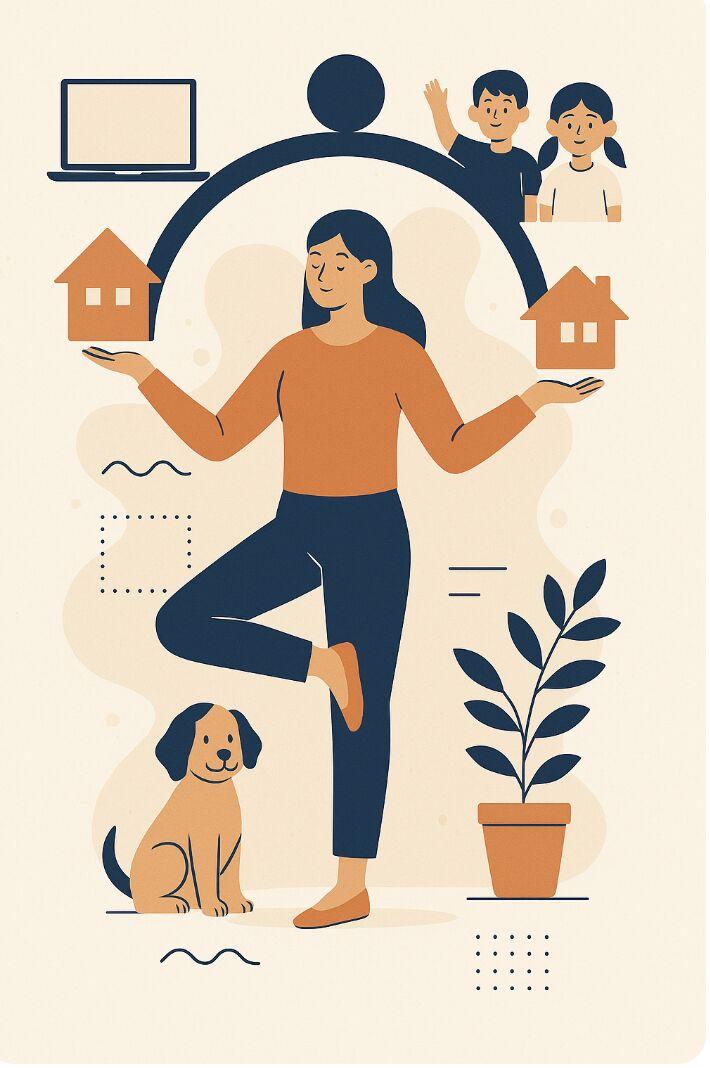
A balanced life doesn't mean having equal amounts of time for everything.
It means giving appropriate attention to the things that matter most.
Your career is important.
Your family is important.
Your health is important.
Your personal interests and happiness are important too.
Sometimes, improving your lifestyle doesn't require a dramatic change.
It may simply mean putting your phone away during dinner, taking a walk after work, sleeping a little earlier, spending more time with your family, or finally making time for something you've always enjoyed.
Small changes, repeated consistently, can create meaningful improvements over time.
Work hard.
Take care of yourself.
Make time for the people you love.
And remember that a successful life isn't only measured by what you accomplish at work—it is also measured by how well you experience and enjoy the life you're building.
Key Takeaways
- Work-life balance is about sustainability, not perfection.
- Understand where your time is actually going.
- Prioritize important tasks instead of trying to do everything.
- Create boundaries between work and personal life.
- Protect your sleep.
- Make regular movement part of your routine.
- Spend meaningful time with family.
- Make room for hobbies and personal interests.
- Reduce unnecessary screen time.
- Learn to say no when necessary.
- Focus on small, sustainable improvements rather than dramatic changes.
Lifestyle Thought
"A successful life isn't just about achieving more. It's also about having the time and energy to enjoy what you've achieved."
Share your experience in the comments. Your simple idea might help someone else.
Rate this article
Sign in to rate this article.